






Understanding how slot paylines work fundamentally changes how you approach online casino games. Modern slots offer four distinct win engines: traditional paylines, ways-to-win systems, cluster grids, and Megaways mechanics. Each system calculates wins differently, affects your bet size uniquely, and delivers distinct volatility experiences. This guide breaks down every engine type so you can choose games matching your budget and playing style at Lucky Tiger Casino.
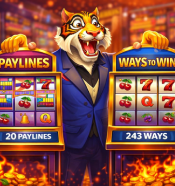
The four main win engines dominate today's slot landscape, each offering unique symbol matching patterns and bet structures. Paylines on slot machines follow fixed patterns running left-to-right across reels, typically ranging from 1 to 100 lines with coins assigned per line. Ways-to-win systems count 243+ adjacent symbol positions without requiring specific patterns, using fixed costs per spin.
Cluster based wins operate on grids ranging from 5×5 to 8×8 where 5+ touching symbols create winning combinations. Megaways engines randomly assign 2-7 symbols per reel each spin, generating anywhere from 324 to 117,649+ ways. The RTP split remains consistent across all engines with base games returning 85-96% and features adding 2-8%.
Traditional slot paylines remain popular despite newer alternatives, offering fixed line structures that many players find comfortable. Classic configurations include 1, 3, 5, 9, 15, 20, 25, 40, 50, and 100 lines depending on game design. The coin model calculates stakes by multiplying your coin value by active lines, so $0.01 per line on a 100-line slot equals $1.00 total bet.
Hit frequency on 20-line games typically ranges from 18-28%, dropping to around 12% on 9-line classics. A leaked Microgaming analysis revealed that reducing active lines from 20 to 1 cuts RTP by approximately 1.2% on average. Low-rollers clearing bonuses often prefer 9-line games at 1-cent coins for maximum spin count.
💡 Always activate all available slot game paylines since partial activation reduces both RTP and feature trigger probability.
The all ways mechanics revolutionized slot design by eliminating confusing line patterns in favor of simple adjacent symbol matching. The mathematics work straightforwardly: a 3-row, 5-reel grid produces 3^5 = 243 ways, while 4-row grids generate 1,024 ways. Bet models use fixed coin counts between 20-50 with no line selection required.
Hit frequency jumps significantly on ways games, typically landing between 30-38% compared to 20-line slots averaging around 25%. Volatility index generally sits in the medium comfort zone between VI 60-120. Starburst exemplifies the format with 10 fixed coins, 96.09% RTP, 22% hit rate, and VI 48 providing extended session times.
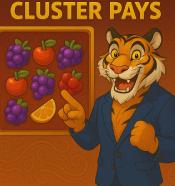
Grid-based slots eliminate traditional reels entirely in favor of symbol blocks that create cluster based wins through touching connections. Common grid sizes include 5×5 in Reactoonz, 6×6 in Sweet Bonanza, 7×7 in Gemix, and 8×8 in Tiki Fruits. Winning requires 5+ matching symbols touching horizontally or vertically, with diagonal connections not counting.
Cascade mechanics trigger after every win, removing successful symbols and dropping new ones while multipliers climb. Hit frequency runs lower at 15-25%, but cluster sizes of 15+ symbols generate substantial payouts. Volatility index ranges from 120-250 in the medium-high bracket, requiring minimum 150-bet bankrolls.
Big Time Gaming's Megaways system represents the most dynamic slot game machine paylines innovation of the past decade. Six main reels each display between 2-7 symbols randomly assigned every spin. Maximum ways calculation reaches 7×7×7×7×7×7 = 117,649, though lower combinations appear frequently.
Every win triggers cascading reactions with unlimited multipliers building during bonus rounds. Base game hit frequency lands between 22-28%, but achieving full 117,649 ways only occurs on 0.2-0.4% of spins. Volatility index spans 150-400, demanding 200-bet minimum bankrolls. The bet line flexibility varies dramatically spin-to-spin, creating unpredictable sessions.
Comparing engines directly reveals how dramatically different experiences emerge from identical slot paylines bet sizes. This reference helps match your preferences to appropriate game types.
|
🎰 Engine |
📊 RTP |
🎯 Hit freq |
⚡ VI |
🏆 Max win |
💵 100-bet spins |
|
20 Paylines |
96.0% |
25% |
80 |
5,000× |
140 |
|
243 Ways |
96.5% |
35% |
60 |
1,080× |
160 |
|
Cluster 5×5 |
96.2% |
20% |
150 |
15,000× |
120 |
|
Megaways |
96.2% |
25% |
250 |
50,000× |
110 |
Higher hit frequency on 243-ways games translates to longer sessions, while Megaways and clusters sacrifice frequency for massive win potential.
Human perception of bet costs differs dramatically between slot paylines systems and fixed-stake alternatives. The line-item effect causes players to view "$0.01 per line" as a bargain while ignoring the 20× multiplication creating identical stakes. Ways games displaying "$0.20 fixed" trigger sticker-shock despite offering higher RTP.
Session testing with 100 players given identical $10 budgets revealed 63% selected 20-line games because they "looked cheaper." Casino interfaces increasingly show "total stake" prominently to reduce psychological bet-friction. Understanding this bias helps you choose games based on mathematics rather than misleading perceptions about bet line flexibility.
Wagering requirement efficiency varies significantly across engine types. Low-volatility 243-ways games like Starburst deliver approximately 97% expected value on 35× wagering requirements. Medium-volatility clusters like Sweet Bonanza achieve 96.5% EV but carry 150-bet swing potential. High-volatility Megaways games drop to 94% EV and should be avoided unless bonuses carry no wagering requirements. The optimal strategy uses 20-40 line low-volatility games for clearing wagering while saving clusters for cash-balance sessions.
Touchscreen interfaces handle different slot machine paylines systems with varying success. 100-line selector grids consume 18% of screen real estate with 12% mis-tap risk during rapid play. Ways games eliminate selectors entirely, offering thumb-friendly spin buttons without configuration complexity. Cluster grids at 7×7 display symbols at approximately 0.8mm each, remaining playable but potentially benefiting from stylus use. Battery consumption differs notably, with Megaways cascade animations draining 23% more power than static 20-line spins.
Innovation continues across all engine types with major releases scheduled throughout 2026. Dynamic Paylines from NetEnt arrives Q2 featuring reels that expand mid-spin from 20 to 50 lines. Play'n GO targets Q3 with Dual Ways hybrid systems paying both directions plus diagonals. Big Time Gaming's Megacluster 2 launches Q4 with 9×9 grids generating 282,576 maximum ways at VI 400. The slot paylines landscape continues evolving while preserving classic options for traditionalists.






















































.png)














 slots.png)










.png)











.png)











.png)


































.png)