





Every click leaves a trail. While live players rely on shaky hands and eye contact, online poker bluffing operates through numbers—milliseconds of hesitation, aggression spikes in your HUD, and bet sizes that scream desperation. The digital felt transforms psychology into algebra, and if you're not tracking patterns, you're handing chips to players who do. This guide decodes the timing-tell histogram, bet-size polarity, and software tools that turn bluff-spotting into mathematical certainty.
What is bluffing in poker? At its core, a bluff is betting or raising with a weak hand to force better holdings to fold. Unlike live games where you read facial twitches, poker online bluffing relies on behavioral data logged by servers. Every decision gets timestamped to the millisecond, creating a permanent record you can analyze.
Pure bluffs carry zero equity if called (7-high on the river), while semi-bluffs involve drawing hands with outs like flush draws betting the turn. Online environments make patterns easier to quantify because physical masking doesn't exist. A player can't fake a neutral expression when their auto-check snap fires in 0.2 seconds. Servers log every action clock, building datasets that reveal who over-bluffs rivers and who only bets nutted hands.
💡 Tag players after 50+ hands. A villain with 40% AF (aggression factor) and 8% showdown value? That's a chronic bluffer begging to be exploited.
Betting speed bluffing in poker measures the seconds between action availability and button click. Instant bets (0–0.5s) typically signal strength or predetermined aggression with auto-bet enabled. Quick decisions (0.5–2s) indicate routine play, while tanks (5–15s) reveal bluff calculations or hero-call math. Deep tanks exceeding 15 seconds suggest leveling or connection issues.
Reliability scales with sample size. One 12-second pause means nothing; twenty 12-second pauses before river bluffs create exploitable patterns. Servers log action clocks to the millisecond, letting trackers build timing-tell histograms that expose habits. However, multi-tabling delay muddles timing data—players managing eight tables might pause to click another table first, not to calculate odds.
A Heads-Up Display overlays real-time statistics on opponents, pulling online poker bluffing data from hand-history databases. In most jurisdictions, HUDs are legal because they use only your own recorded hands.
|
Stat 📊 |
Definition |
Bluff Signal 🎯 |
|
AF (Aggression Factor) 🔥 |
(Bet + Raise) ÷ Call |
>3.0 = over-aggressive |
|
3-Bet % ⚡ |
Reraise frequency pre-flop |
>12% = wide/light |
|
C-Bet % 💪 |
Flop continuation bet |
>75% = auto-pilot |
|
River AF 🎰 |
Aggression on 5th street |
>4.5 = river spew |
Trust AF after 100 hands, 3-bet% after 300, river stats after 500. Colour-code villains: green for tight, yellow for standard, red for maniac. Databases like PT4 source numbers from every pot you've witnessed, building profiles over thousands of hands. Enjoy exciting slot games and discover top-quality slot online entertainment at Lucky Tiger Casino.
Bet-size polarity reveals poker bluffing game intent. Solvers approve specific bluff frequencies tied to pot odds: a half-pot bet requires 33% fold equity to break even, while a 2× pot jam needs only 25% folds. Population over-bets (1.5×+ pot) show GTO range of 15–20% bluff frequency, but population reality hits 35–40%, creating an exploitable gap where you should call wider with bluff-catchers.
Donk-bet patterns (betting into the pre-flop raiser) run 80% for value, 20% as weak blocks in population play. When you see a donk-bet, it's usually not a bluff unless villain's HUD aggression factor exceeds 4.0. The EV formula for calling is straightforward: EV = (Win% × Pot) – (Lose% × Call Size). If villain jams $100 into a $50 pot with 35% bluff rate, you need just 25% equity to profit.
Poker bluffing strategy shifts by seat. Button players bluff rivers 28% in solver models, while small blind bluffs drop to 18% because they act first on every street.
|
Position 💺 |
Solver Bluff 🤖 |
Population 👥 |
Exploit 💰 |
|
BTN |
28% |
35% |
Call more rivers |
|
CO |
24% |
30% |
Defend 3-bets tighter |
|
SB |
18% |
25% |
Trap with slow-plays |
|
EP |
15% |
20% |
Value-bet thinner |
Use PT4 filters to isolate "BTN river bets >1× pot" and discover most regs over-bluff by 7–10%. Against red villains (≥35% bluff rate), hero-call with any pair. Against blue villains (<18%), fold all but top-pair hands.
Caps-lock messages and emoji spikes correlate with tilt. A study of 4,200 hands found that players who type "LOL NICE SUCKOUT 😂" see their HUD aggression factor jump 1.8 points over the next 12 hands. Players saying "you know you're beat" are actually beat 62% of the time, while "NH" (nice hand) after losing predicts an AF spike. Muting toxic online poker bluffing players protects your mental game, but monitoring chat silence cue patterns helps predict when someone's about to punt. A normally chatty player going silent for 30 minutes? They're steaming.
After losing three buy-ins, average aggression factor jumps from 2.1 to 4.7. Emoji usage doubles as frustrated players spam 😤 and start jamming rivers with air. The tilt effect peaks within 20 hands post-bust, then fades as players quit or regain composure. During this exploit window, widen your calling ranges by 15%, target their 3-bets with 4-bet bluffs, and avoid hero-calling beyond 80bb cumulative loss. If you're the one down three stacks, enable Punt-Block plug-ins that freeze your lobby after online poker bluffing preset losses.
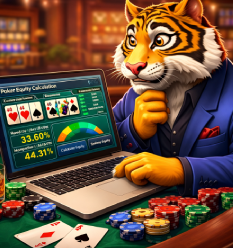
Population data reveals 68% fold to 2× pot jams on the river, yet solvers say you should fold only 50–55%. That 13–18% gap is pure profit. To call a pot-sized bet profitably, you need roughly 33% equity; against an over-bet, that drops to 25%. Top calling candidates include all pocket pairs (22+), ace-high with blocker bet pattern clues, king-high if villain's river overbet freq exceeds 25%, and missed flush draws with showdown note tag history. However, if villain is a known nit (VPIP <15%, PFR <10%), their 2× pot jam is the nuts 90% of the time.
|
Your Hand 🎴 |
Equity vs Range 📈 |
Call EV 💵 |
Fold EV 🚫 |
|
2nd pair |
28% |
–2.1bb |
0bb |
|
Top pair |
42% |
+8.4bb |
0bb |
|
Ace-high |
18% |
–6.7bb |
0bb |
Recency bias costs 2.8bb/100. You catch one bluff and suddenly every bet looks suspicious, causing players to over-call by 12% for 50 hands after a correct hero-call. Remember that long tanks don't equal bluffs—many regs tank with the nuts to induce, creating a reverse tell trap. Without 100+ hand samples, timing tells are noise. Competent players fake timing by snap-calling with monsters or tank-folding air. Only exploit timing tells against recreational players with VPIP below 25%.
🛡️ If you've made three losing hero-calls totaling 80bb+, take a 20-minute break. Tilt-call reduction studies show a 34% drop in spew after mandatory cool-offs.
Get operational fast: use PT4 filter builder to create custom filters like "Villain 3-bets >10% AND river bets >1× pot," then export to CSV for solver analysis. Set up auto-tag colour scripts in PT4 or HM3 to assign colours based on stat thresholds (red for maniacs with AF >3.5, green for nits with VPIP <18%). Create note-taking shortcuts with hotkey templates like "R-OB-F" for River Over-Bet Fold, building a showdown note tag library. Export hand histories to PioSOLVER or GTO+ to confirm poker bluffing population deviations. DriveHUD Mobile syncs with desktop databases, showing stats on your phone during tablet play. Total setup: under 5 minutes.
Implement hard stops: three hero-calls totaling 80bb+ in losses means locking your account for 60 minutes. Studies show tilt-call reduction drops spew by 41% when timers are mandatory. Enable session breaks every 90 minutes because mental fatigue erodes bluff detection accuracy after two hours. Use Punt-Block plug-ins that freeze your lobby when bankroll drops 15% in one session, available via ResponsibleGaming.com integrations. 📞 If poker stress affects daily life, call NCPG at 1-800-522-4700 for free, confidential support 24/7.
The best bluff-catchers are skilled bluffers. Understanding when you'd bluff sharpens detection instincts. Balanced ranges bluff 25–30% of river bets, while exploitative ranges bluff 40%+ if population over-folds. Against nits folding 75% to river aggression, jam air relentlessly until they adjust. Use detection stats to value-bet thinner—if your HUD shows villain calls river bets only 32% of the time, bet marginal hands because they're folding too much. After each bluffing poker session, export hands where you hero-called, check actual equity at showdown, compare to required calling equity, and adjust thresholds for next session. Once you're profitable at 50NL for 50k hands (3bb/100+), shot-take 100NL. Claim your bonus and explore Lucky Tiger Casino with no deposit required.
Lucky Tiger casino poker bluffing tips delivers the tools serious players demand. After 10k hands, unlock built-in HUD badges that display opponent tendencies without third-party software. Verified 3:2 blackjack tables run S17 and DAS rules, while the poker lobby supports full stat overlays. 🎰 Enjoy 20% weekly cashback to cushion variance—automatic rebates every Monday smooth your ROI curve. Mobile and desktop trainer modes sync your database across devices, letting you study poker bluffing during lunch breaks and apply it in evening sessions.
👉 Open the poker lobby → Enable HUD overlays → Spot the liars → Claim your 20% cashback













































.png)













 slots.png)










.png)










.png)













.png)

























.png)