







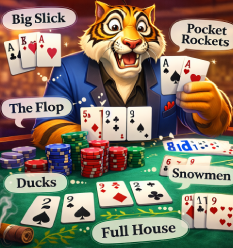
Picture this: every player at the table throws chips into the middle before anyone peeks at their cards, then the dealer skips straight to the flop. That's bomb pot poker — a high-octane format that tosses careful preflop strategy out the window and drops everyone into post-flop action with a massive pot already built. This guide breaks down exactly how these explosive hands work and shows you how to profit when chaos hits your table.
So what is a bomb pot in poker? It's a special hand where every player contributes a set ante contribution, skips preflop betting entirely, and sees the flop together. The result is a bloated pot with zero information about opponent holdings.
The setup is simple but game-changing. Every player posts an agreed amount, the dealer burns a card and reveals three community cards immediately. No folding beforehand, no raising to thin the field — you simply see your hole cards and react to the flop with everyone still in.
Most cardrooms trigger these bomb pot poker hands at dealer changes or on the hour. House rules vary significantly between venues, so always confirm the local custom before sitting down. Private casino games often run them after big pots or on player request.
Casinos appreciate bigger pots generating more rake quickly. Players enjoy the excitement injection into routine sessions. The format also levels the playing field since skilled preflop players lose their main edge.
Did you know:
In a bomb pot, every player sees the flop — no one folds preflop. That means you're always playing against a full table with zero range information!
Understanding what is bomb pot poker in its various forms prepares you for whatever version your local room runs.
The classic version uses one shared board like regular Texas Hold'em variants. All players see identical community cards, and the best hand claims everything. This straightforward approach delivers plenty of action while keeping decisions manageable.
Double board bomb pot poker deals two separate flops, turns, and rivers. Half the pot goes to each board's winner. This creates fascinating spots where you might dominate one board while drawing dead on the other.
Four hole cards combined with bomb pot format creates truly wild action. Pot-Limit Omaha already produces monster hands, and when everyone sees every flop, expect straights, flushes, and full houses colliding constantly. The pot-building before action begins means serious money at stake.
Following bomb pot poker rules correctly prevents disputes and keeps gameplay smooth.
Players agree on ante amounts before the first bomb pot occurs — typically two to five times the big blind. Consistency matters so everyone can plan their session bankroll properly.
Once antes are collected, the dealer burns one card and deals three face-up. This happens before anyone acts or necessarily looks at their hole cards. Some players wait to peek until after the flop appears.
Position in bomb pots remains valuable despite skipping preflop. The player left of the button acts first, and acting last provides crucial information in multi-way pots before committing chips.
Feature |
Regular hand |
Bomb pot |
Strategic impact |
💰 Pot size at flop |
Variable |
Fixed (all antes) |
Larger pots change commitment math |
🃏 Preflop info |
Full betting round |
None |
Zero hand reading available |
👥 Players at flop |
Usually 2-4 |
All (6-9) |
Stronger hands required |
📍 Position value |
High throughout |
Matters post-flop |
Acting last still advantageous |
Success demands a mental reset from standard play. Normal winning strategies can actually cost you when the bomb drops.
In standard poker, you estimate ranges from preflop actions. That reasoning vanishes here — opponents could hold pocket aces or 7-2 offsuit. Strategic aggression must account for this randomness.
With six to nine players at the flop, someone likely flopped a monster. Top pair becomes mediocre in multi-way pots this size. Adjust standards significantly upward and avoid splashing the pot with medium-strength holdings.
Strategy Tip:
In bomb pots, only commit chips with the nuts or near-nuts. Top pair is rarely good enough against six-plus opponents all seeing the flop.
Your goal shifts toward scooping both halves rather than winning one. Drawing hands with equity across both boards become more valuable than made hands winning only one side.
The pot starts huge relative to stacks, creating low stack-to-pot ratios immediately. Recognize when you're mathematically committed rather than attempting fancy plays that don't fit the numbers.
Even experienced players make costly mistakes when bombs drop. Recognizing these errors helps you profit from opponents who fall into traps.
Drawing to the third-best possible hand against eight opponents provides weaker equity than it feels. Non-nut flushes particularly cause problems — when you hit, you often lose to bigger flushes.
With so many opponents, someone almost always connects with the board. Save bluffs for heads-up situations in regular hands. Post-flop action in bombs is primarily about value betting strong holdings.
Attention:
Never bluff in a bomb pot with a full table. Someone always hits the flop — save your bluffs for heads-up spots in regular hands.
In double board spots, calculate whether winning your bomb pot poker draw actually improves your overall situation before committing chips. Drawing to split the pot while risking getting scooped creates negative expected value.
Handling these hands smoothly requires understanding social conventions beyond just rules.
Many cardrooms use a special marker indicating the next bomb pot. Knowing its location helps you anticipate when action comes and mentally prepare for the different strategy required.
These hands move significant stack portions quickly. Bring a larger bankroll when frequent bomb pots occur, and accept higher variance than straight cash games.
Discuss rules before anyone sits: frequency, ante size, single or double board, mandatory or optional participation. Agreement prevents conflicts and ensures everyone enjoys the format.
Quick decisions require a mental framework when that flop hits.
Hand strength |
Single board action |
Double board action |
Risk |
🏆 Nuts/near-nuts |
Bet/raise aggressively |
Bet strong, seek scoop |
Low |
💪 Strong made |
Bet value, fold to heat |
Continue if both boards live |
Medium |
🤔 Medium strength |
Check/call cautiously |
Only continue both boards live |
Higher |
📉 Weak made |
Check/fold |
Fold unless freerolling |
High |
🎯 Nut draws |
Semi-bluff with position |
Draw aggressively both sides |
Medium |
Bonus insight:
Bomb pots create high variance — always bring a larger bankroll to sessions where they run frequently. Stack-to-pot ratios drop fast!
































































.png)















 slots.png)










.png)












.png)













.png)






































.png)