







Understanding RTP vs Volatility in slots is key to planning your gameplay. RTP shows the long-term return you can expect, while volatility indicates how often and how big wins might be. Knowing both helps you choose games that match your style, bankroll, and session goals, so you can enjoy a balanced mix of steady payouts and exciting swings.
Strategy Tip:
Match volatility to session length. Short sessions suit lower variance; marathons can explore higher variance for bigger peaks.
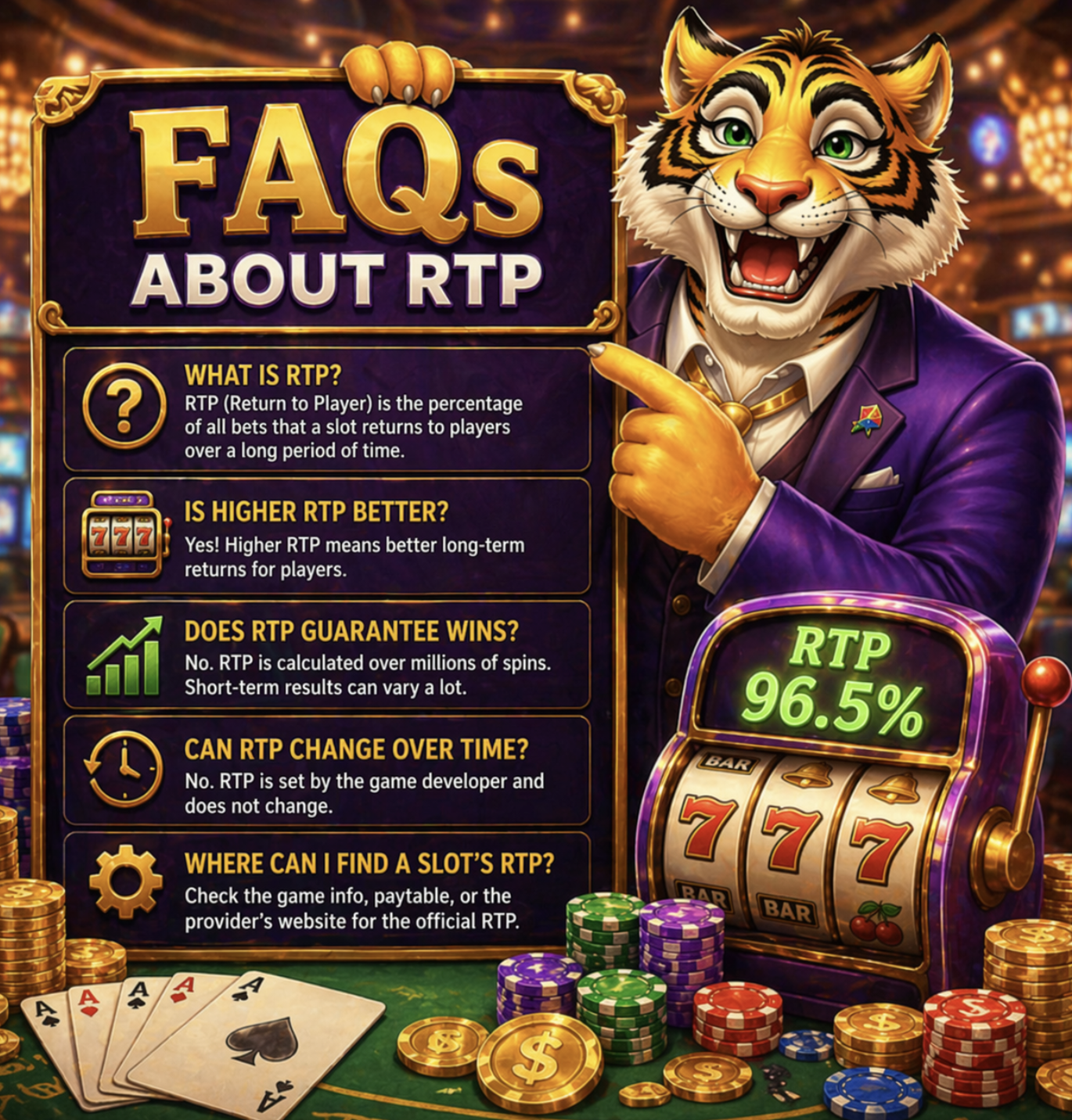
RTP (Return to Player) describes the share of all stakes a slot is designed to return to players across a very large number of spins. It is a long-run average, not a prediction of what happens today. If two titles both post 96%, they can still feel different in short sessions because volatility controls win frequency, size of wins, and streak patterns.
In our lobby, we display the RTP published by the provider or certified lab where available. That percentage helps you compare titles at a glance, but it must be paired with variance information for a complete picture. Think of RTP as the "total pie" sliced across countless spins, while volatility decides how big each slice is and how often slices appear.
Return to Player is the theoretical percentage of total stakes that a game gives back over the long term. For example, an RTP of 96% means that, statistically, the game returns €96 per €100 wagered when measured across a massive sample. Individual sessions can land above or below that figure because randomness is always in play.
RTP reflects built-in math: reel strips, symbol weights, feature triggers, and prize tables. It supports payout stability at scale, but it cannot smooth short-term variance. That's why players sometimes see long dry spells followed by a cluster of payouts; the average emerges only over time.
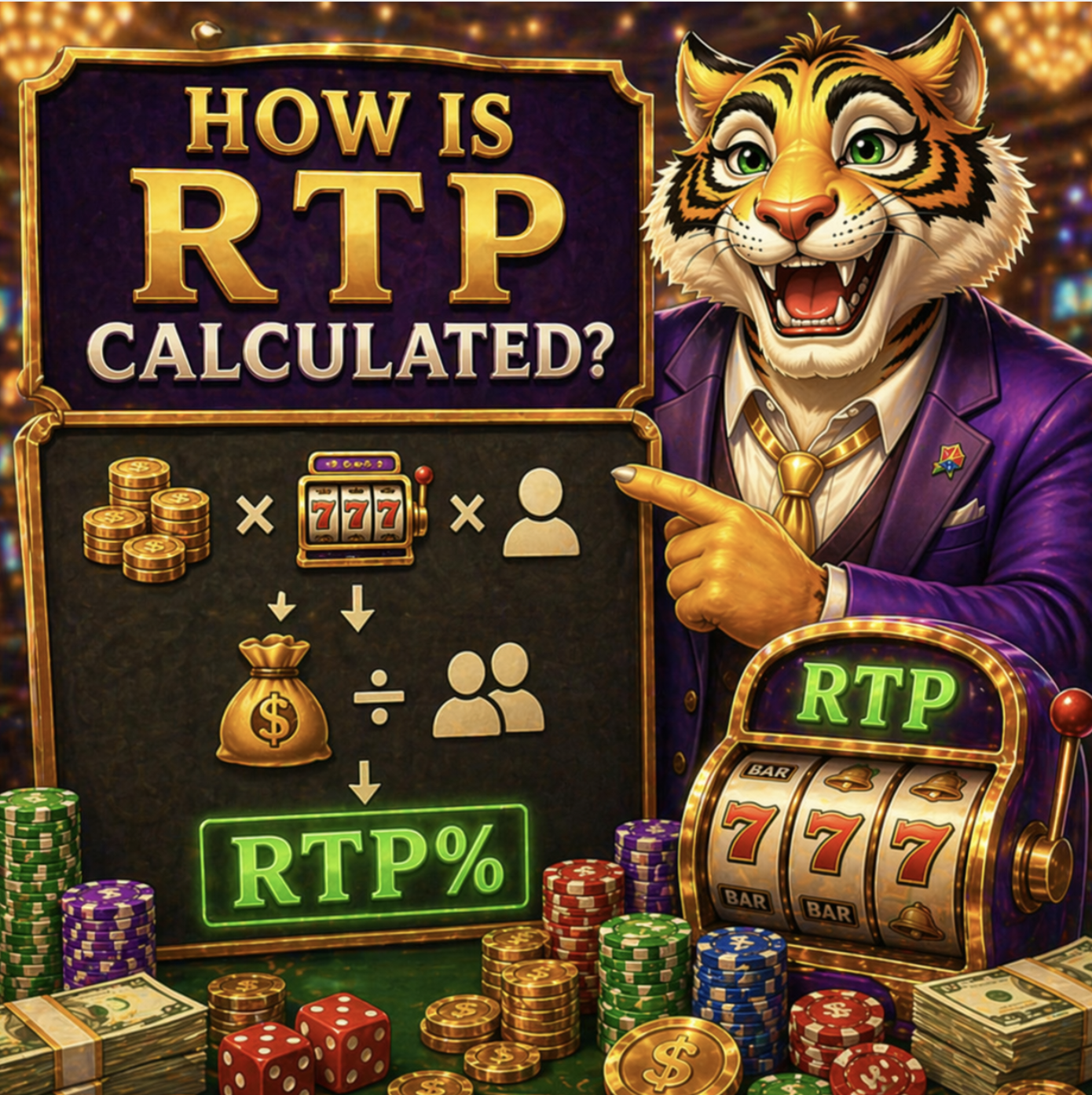
At a high level, RTP is derived from the expected value of all possible outcomes: the sum of (each outcome's probability × its payout), divided by stake size, expressed as a percentage. Providers validate this using combinatorial math and large-scale simulations; independent labs then test builds and certify the published number.
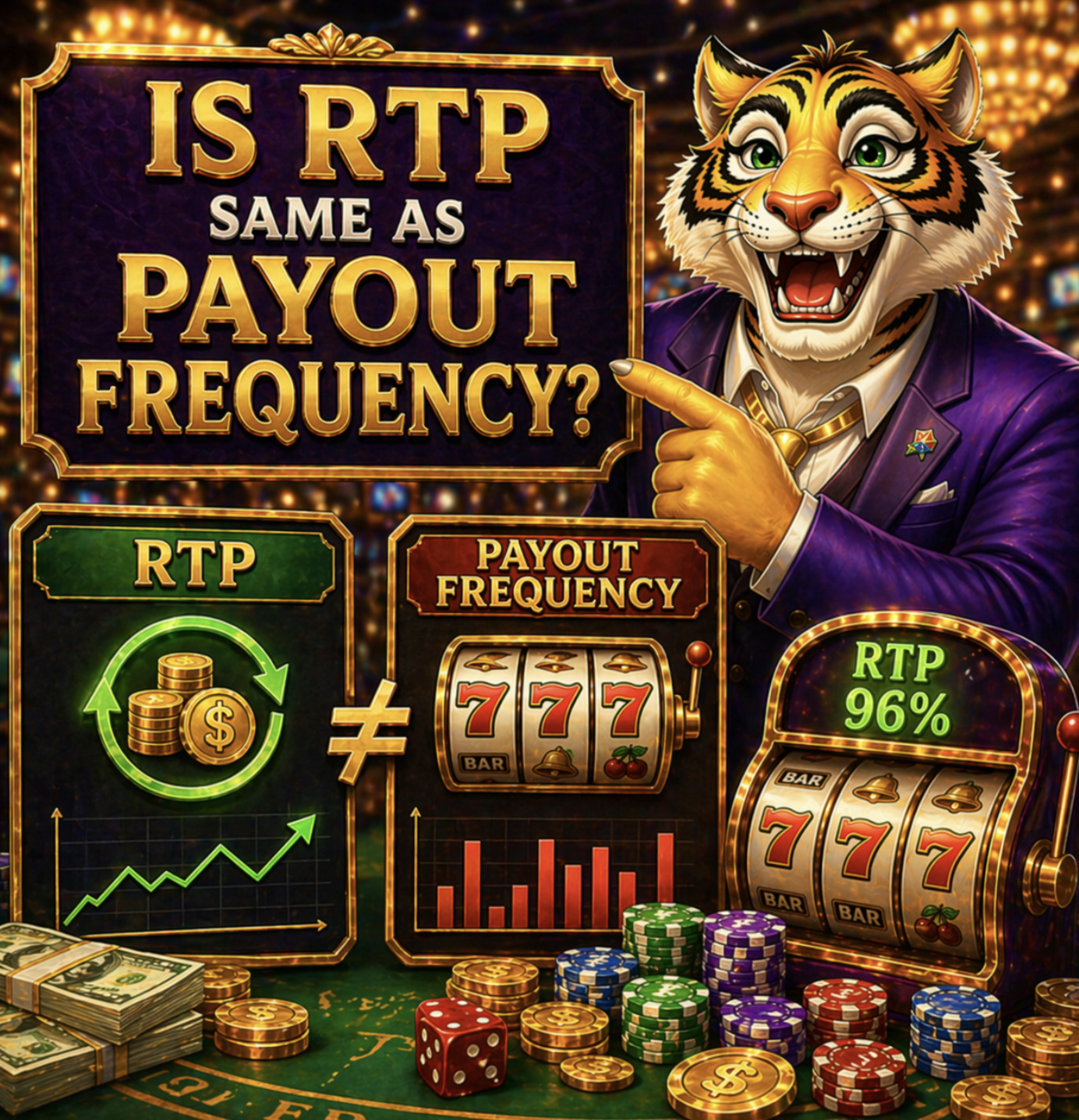
Two points matter for everyday play. First, RTP is long-run and needs volume - thousands or even millions of spins - for the average to stabilize. Second, RTP does not dictate hit rate or win size; those are the domain of volatility and hit rate. So a 96% title can still deliver rare but chunky features, or frequent small line hits, depending on its variance profile.
Did you know:
Two games can share the same RTP and still feel very different because their payout distributions are not alike.
Volatility describes how a slot spreads its payouts across time. High dispersion means fewer but larger wins; low dispersion means smaller but more frequent returns. In other words, volatility shapes hit rate and the size of individual hits, while RTP sets the long-run average. If you've ever seen long dry spells followed by a big feature, that's the variance curve at work - slots variance explained in simple terms.
For session planning, volatility affects bankroll swings, comfort level, and how long your balance can sustain a playstyle. High-volatility titles can be thrilling but choppy; low-volatility games feel steadier and support game payout consistency over short stretches. Your choice should reflect slot risk vs reward tolerance and the time you want to spend on each session.
Slot volatility is the statistical variance of outcomes around the game's expected value. Two games can share the same RTP and still feel very different because their payout distributions are not alike. One may deliver frequent small line hits; the other saves value for infrequent but heavy features.
Volatility is usually inferred from hit rate, bonus cadence, top-win ceiling, and paytable shape. It does not change the theoretical return; it redistributes how that return arrives. That's why hit rate is a helpful signal: higher frequency commonly pairs with smaller average prizes, while lower frequency often implies larger peaks online casino.
Quick player strategy tips
Bonus insight:
Low volatility means frequent small wins keep balance circulating. High volatility means rarer but larger payouts.
RTP is the long-run average return built into a game's math, while volatility determines how unevenly that return is delivered across sessions. When comparing RTP vs Volatility, think "overall percentage" versus "payout pattern." Two titles can share 96% and still feel worlds apart because one redistributes value into steady line hits and the other concentrates it in rare features.
From a practical angle, RTP helps with budgeting and long-term planning, but volatility shapes the emotional rhythm: droughts, spikes, and perceived hit rate. If your goal is calm pacing, a lower-variance game will usually feel more comfortable at the same RTP. If you're chasing big peaks, higher variance accepts longer gaps between notable payouts.
The average return is a theoretical anchor; it says nothing about how many hits you'll see per hour. Frequency is controlled by variance, hit rate, and feature design. A game can average the same yield over 100,000 spins whether it pays "little-and-often" or "rare-and-large." This is why session length and comfort vary even when RTP matches.
To visualize the split, compare two hypothetical 96% titles:
|
Attribute |
Game A (Lower Variance) |
Game B (Higher Variance) |
|
RTP |
96% |
96% |
|
Hit rate |
32% |
18% |
|
Typical base-game prize |
0.5×-3× |
0.2×-1× |
|
Feature cadence |
Frequent, modest |
Infrequent, explosive |
|
Top potential |
2,000× |
10,000× |
|
Session feel |
Smoother, longer time-on-device |
Swingy, bigger emotional spikes |
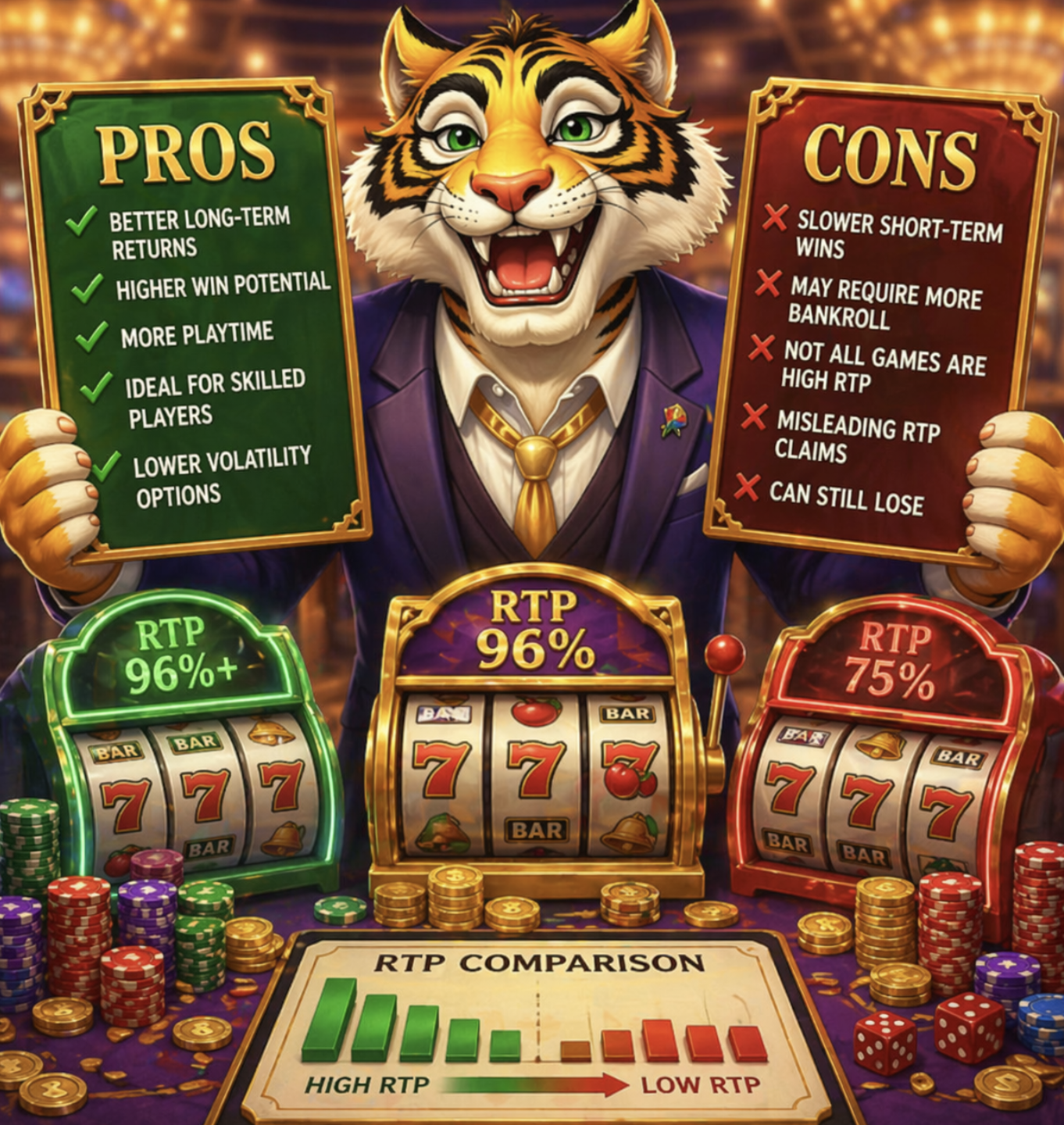
A higher percentage improves long-run efficiency but does not guarantee a busy hit calendar. Designers can allocate more of that return to rare features, progressive ladders, or multipliers, leaving the base game sparse. In other words, RTP vs Volatility is not a ladder where one metric automatically improves the other; they are orthogonal.
Consider two builds at 97%. One pushes extra value into an expanded bonus with large multipliers, creating longer quiet phases between highlights. The other spreads value into base-game reels and mini-features, creating a livelier screen. Both average well over time, but only one feels active in short windows. That's slot risk vs reward playing out through distribution, not percentage alone.
Quick checks before you dive
Attention:
High RTP does not guarantee frequent wins. Designers can allocate return to rare features, leaving base game sparse.
RTP defines the long-run efficiency of a game, while volatility shapes the day-to-day rhythm of payouts you actually feel on screen. Together, they influence session length, emotional swings, and how quickly a balance rises or falls. Higher RTP supports long-term value; variance determines the cadence of hits you experience in a single evening.
If you prefer steadier pacing, look for lower dispersion and clear hit-rate signals. That typically improves perceived payout stability during short sessions. If you enjoy dramatic moments and are comfortable with droughts, higher dispersion can deliver the standout features you're chasing - provided your budget and time window fit the profile.
Start with your session goal: do you want extended playtime, a shot at a peak prize, or a mix of both? For relaxed play and missions that reward activity, lean toward gentler variance with supportive base-game pays. For trophy hunting, favor games that channel more value into features and top-end potential, accepting that the road between highlights may be longer.
Match stake to cushion. A common approach is to keep 100-200 base bets for lower variance and 300-500 for higher variance to absorb downswings. Take a short demo run to sample hit rate and feature cadence; if the screen feels too quiet for your taste, step down the variance tier rather than forcing the rhythm with larger stakes.
Player strategy tips
Think of your plan as a dial between comfort and ambition. On one side sits smoother pacing and more time on device; on the other, spike potential and bigger emotional swings. Considering RTP vs Volatility helps you decide where that dial belongs, guided by your bankroll, patience, and end goal.
Streaks - both cold and hot - are part of randomness. Understanding slot variance explained helps set expectations: variance redistributes outcomes around the same theoretical return without changing it. Build guardrails with pre-set stop-loss and stop-win markers, and review a game's paytable to see whether value concentrates in features or is spread across base-game lines.

































































.png)
















 slots.png)










.png)












.png)













.png)







































.png)