







We publish Return to Player (RTP) values because clear numbers help players understand how a games is designed to behave over a long horizon. At our casino, this practice is part of our broader commitment to casino transparency: the more you know about a slot's math, the more confident you are in choosing it. In plain terms, why RTP is shown is simple - players deserve solid, comparable data before they press spin.
Strategy Tip:
Don't rely on third-party review sites alone. Always open the in-game "i" panel before spinning to confirm the exact percentage.
When we publish RTP, we are giving you slots player details that turns an opaque mechanic into measurable player information. It is a kind of game disclosure that lets you compare titles by their long-run expectations. Alongside payline schemas and feature descriptions, RTP sits as a reference point: it won't predict your next spin, but it tells you how the game is calibrated.
We also make slot payout display details easy to find. That includes the theoretical payout percentage, the hit frequency (where applicable), and any variance notes explaining whether a game tends to deliver smaller, frequent hits or larger, less frequent bursts. Together, those elements support responsible play by aligning expectations with how the math actually works.
Trust grows when information is clear, consistent, and always in the same place. By standardizing our RTP presentation across titles, we reduce confusion and signal that our slot fairness policy is not a slogan but a documented approach. In practice, this means every featured title has an accessible RTP page or panel, written in the same plain language you see here.
We also connect RTP with practical guidance. We explain what it does - long-run theoretical return - and what it does not do - predict an individual session. That distinction matters because trust requires boundaries: you know what the number means, you know what it cannot promise, and you can plan your session length and budget accordingly, which is the heart of online casino transparency.
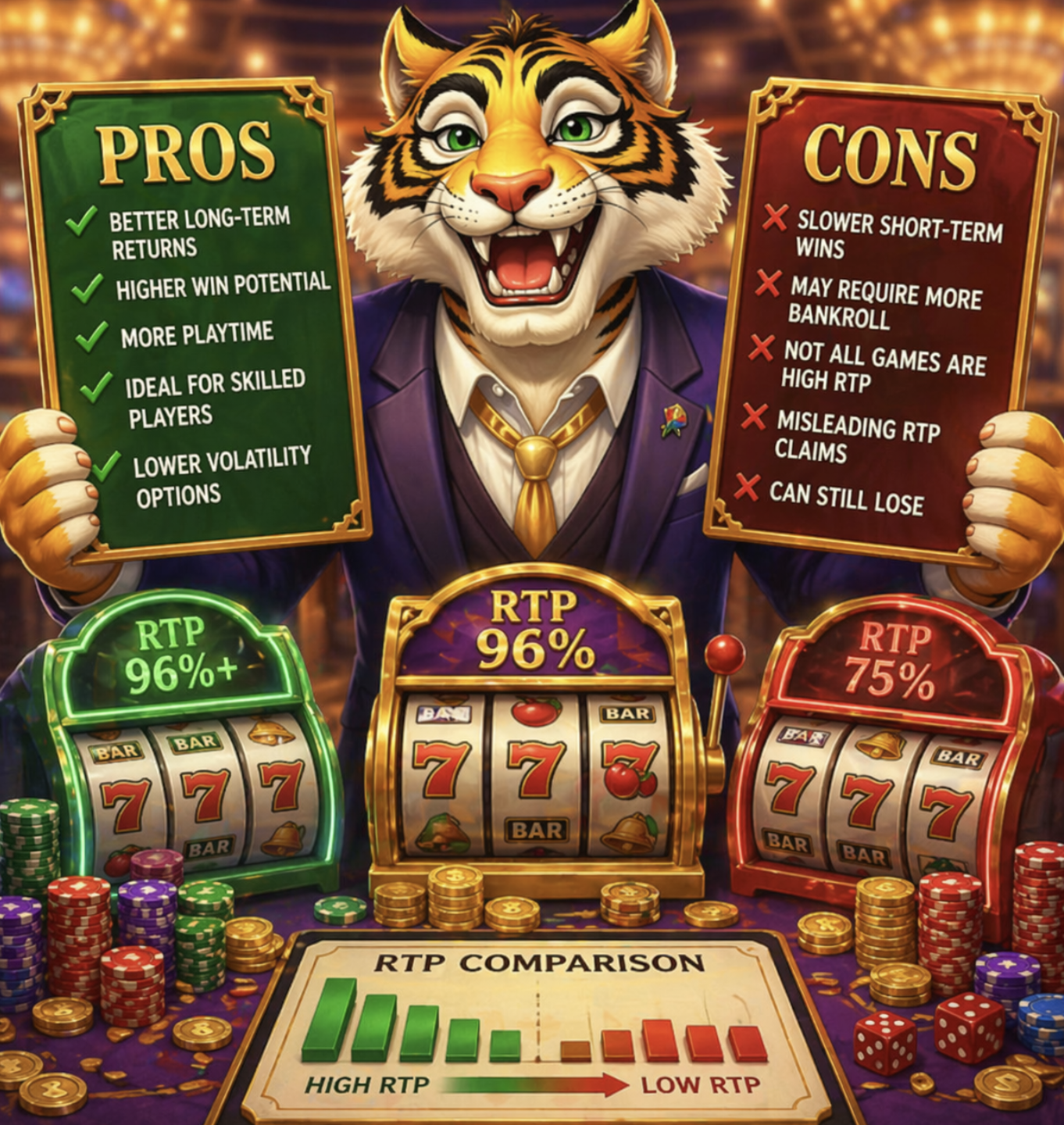
Pros and cons of publishing RTP (lead-in): below is a quick, balanced view to set expectations before you choose a game.
Many jurisdictions expect casinos to surface clear payout information. Where rules apply, we follow RTP regulations by showing the current theoretical percentage in an always-available location. This is paired with casino regulation info such as the game provider, certification status, and version identifiers, so you can see exactly which build you're playing.
Compliance also means timely updates. If a provider ships a new math model - for example, a variant moving from 96.2% to 95.8% - we synchronize the figure across the in-game panel and our site. That way the number you see matches the certified release. Below is how we operationalize that promise:
Did you know:
The same slot title can have 4-5 different RTP configurations globally. Your casino version may differ from generic databases.
Seeing RTP in a consistent, readable format turns complex math into practical guidance. You get player information that helps you plan session length, set budgets, and compare titles without guesswork. Clear numbers also reduce surprises: if a game is tuned for steadier, smaller hits, you can align your expectations before you start.
This clarity is the real reason why RTP is shown across our library. It supports gaming transparency and a stable game disclosure standard. When RTP sits next to volatility notes and feature summaries, you get a fuller picture of risk, pacing, and long-run behavior - information that encourages measured play rather than impulse decisions.
RTP is not a prediction tool; it is a calibration label. Treat it like the baseline that frames the game's long-run behavior, then factor in volatility and hit rate to decide how comfortable a title might feel for your style. That way, you translate slot player info into concrete choices: session budget, expected streakiness, and how often features tend to land.
A simple process helps:
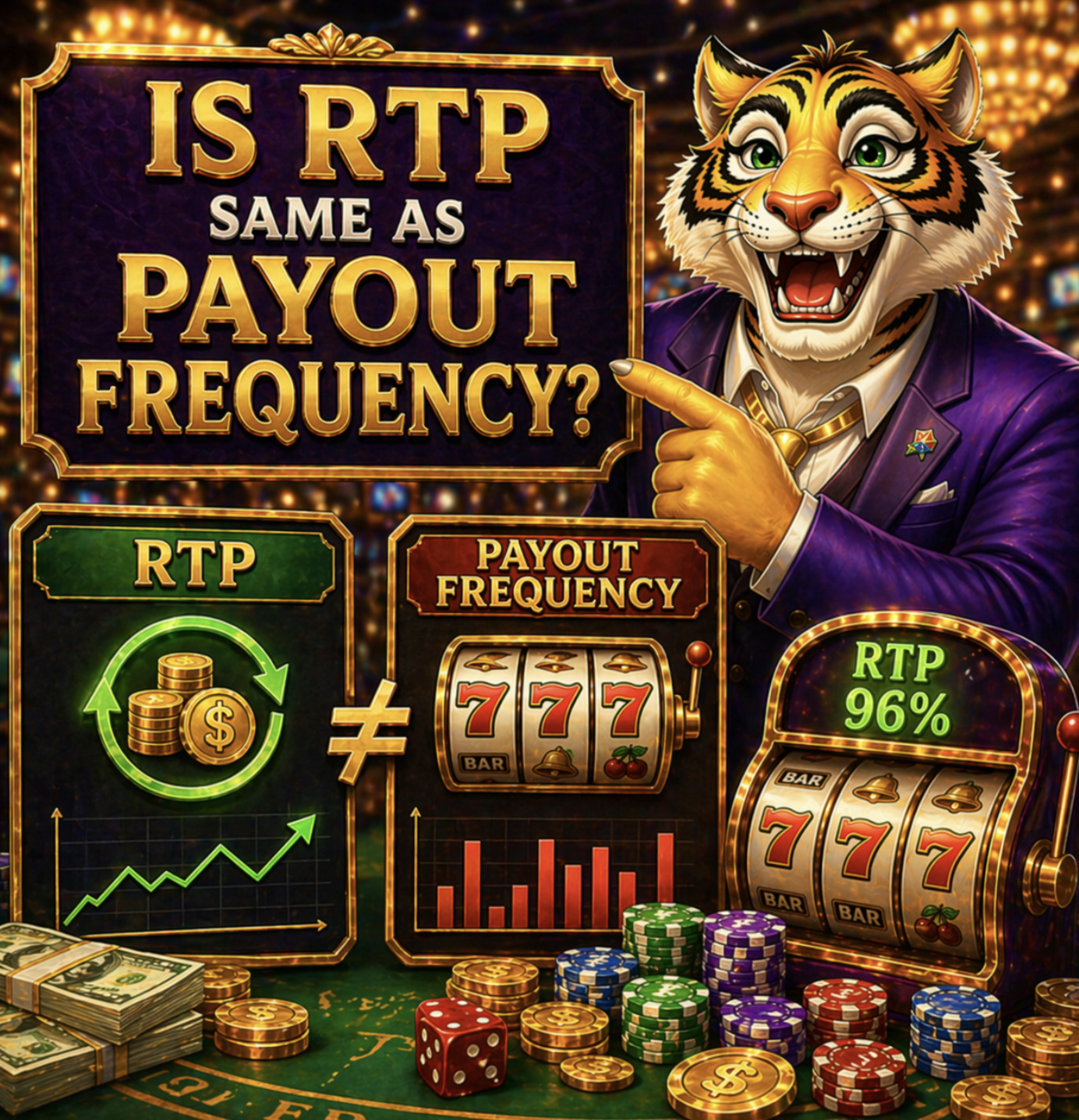
Two slots can share the same RTP and still feel different. The difference lies in volatility profiles, feature weight, and base-game distribution. When you weigh potential returns, read the RTP first, then ask: where does the game store its value - frequent small hits, or less frequent but larger feature rounds? Your answer guides how much time and budget you allocate.
For practical selection, start with titles whose RTP sits within your comfort band (for example, around 96%). Then confirm how features affect session flow: is most value locked behind bonus rounds, or is the base game lively enough to sustain longer play? Our pages group these signals under player information so you can scan quickly and decide. This is the everyday payoff of gaming transparency - not just numbers shown, but numbers explained.
Bonus insight:
Look for Game Facts blocks or footer compliance sections on casino sites. These link to regulator audit trails.
Clear presentation matters as much as accurate numbers. That is why we standardize our slot paytable so you always find the percentage in the same place, written the same way, and paired with short, plain-language notes. Consistency lowers friction: you don't have to hunt through menus or guess which terminology a particular title uses.
Just as important, we avoid jargon unless it's explained. When we mention terms such as volatility or hit rate, we provide quick definitions next to the RTP line. This format supports gaming transparency and answers the core question of why RTP is shown: because consistent labels plus short explanations let you compare games in seconds and make choices with confidence.
|
Location in the interface |
How to access |
Information shown |
Update signal |
Notes |
|
In-game info panel ("i" icon) |
Tap/click the "i" or open the paytable from the game menu |
Theoretical return (%) for the current build, volatility tag, hit frequency (if provided), feature summary, version/build ID |
Version/build ID and last-updated timestamp |
Fastest way to see the percentage without leaving the game; available on desktop and mobile |
|
Game launch modal |
Select the game, then choose "More info" or "Help" on the pre-launch screen |
Concise overview: percentage, variance note, brief feature highlights |
"Updated on" date in the modal footer |
Useful for a quick check before starting a session |
|
Game page on our website ("Game Facts" block) |
Open the game page, scroll to "Game Facts" |
Percentage, volatility note, feature focus areas, certification reference, version/build ID |
Timestamp near the facts block |
Best for side-by-side comparison across titles |
|
Category listing tiles |
Browse a category; each tile shows a compact facts badge |
Percentage badge plus a short variance label |
Inherits the date from the game page |
Designed for quick scanning when shortlisting games |
|
Footer compliance section on the game page |
Scroll to the bottom of the game page |
Version/build ID, certification reference, jurisdictional note |
Dated change-log entry linked from the footer |
Serves as the canonical record of the active build |
|
Account area change-log |
Profile → Updates |
Historical entries of percentage or build changes per title |
Entry date and title/version |
Transparent history for players who track revisions |
Inside each title, look for the "i" icon or the paytable button. There you'll see the theoretical return as a percentage, the version identifier, and - when relevant - a note describing variance and feature frequency. It's the fastest way to view slot player details without leaving the game screen, and it keeps expectations aligned with how the math behaves over time.
Beyond the game client, we mirror the same information on our site. Every game page includes a "Game Facts" block with the RTP percentage and a compact description of volatility and feature value. This duplicate slot paytable helps you compare titles side by side before launching anything, especially when you're browsing on mobile or planning a longer session.
Where required by return-to-player rules, we add jurisdictional notes and casino regulation info so you can see which certified build you're playing. We also time-stamp updates when a provider ships a new math model.
Attention:
If you cannot find RTP in game rules or lobby, play elsewhere. Missing RTP is a major red flag.
RTP exists to inform, not to predict. The number anchors expectations over long horizons, while actual sessions are shaped by variance and feature timing. Presenting the figure alongside volatility notes gives slot player details context, which is the practical core of gaming transparency - numbers paired with plain explanations.
Another frequent confusion is mixing RTP with luck. Our game disclosure makes clear that the percentage is a design parameter, not a promise. We include reminders in the client and on game pages so the model's intent stays visible, and our slot fairness policy keeps those reminders consistent from title to title.
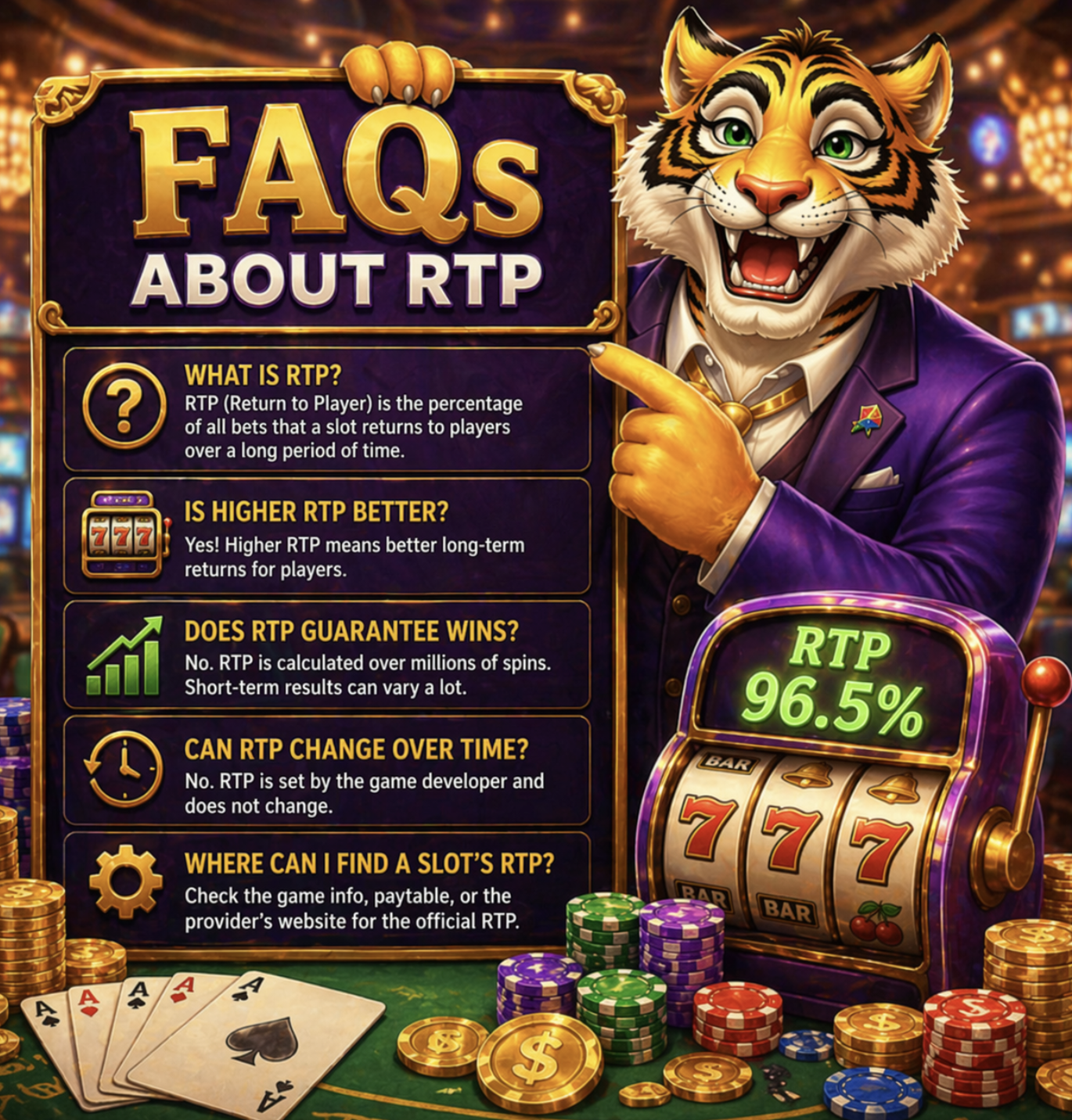
A higher percentage can make a title more appealing, but it never turns the game into a certainty. RTP describes theoretical return across millions of spins; individual sessions sit on a much smaller sample where volatility dominates. Bonus-trigger spacing, multiplier distribution, and hit frequency all drive short-term swing.
This is why RTP is shown: to frame the long-run profile, not to certify outcomes. Our slot paytable places RTP next to volatility notes and feature summaries so you see both the baseline and the likely rhythm of play. Read them together, and you'll avoid treating a long-run metric like a short-run forecast.
The payout model is baked into the certified build from the game provider. Changing that model requires a new version, new certification, and synchronized updates wherever the game appears. In regulated markets, return-to-player rules and external labs verify the math, and we publish casino regulation info - including version IDs - so you can see which build is active.

































































.png)
















 slots.png)










.png)












.png)













.png)








































.png)