





Full house poker is one of those hands that dominates most opponents at showdown, yet many beginners aren't sure how to read it, rank it, or play it correctly. This guide covers everything from the basic definition to strategy, so you can make smarter decisions every time this hand appears.
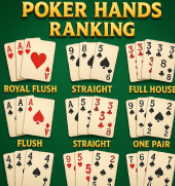
What is a full house in poker is one of the most common questions from new players. A full house ranks fifth in the standard hand rankings, sitting above a flush and below four of a kind. It appears frequently enough in Texas Hold'em and PLO that understanding it is essential for any serious player.
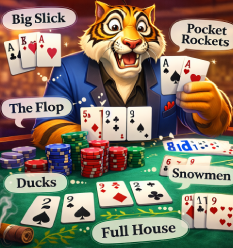
A full house consists of five cards: three of the same rank plus two of a different matching rank. The three of a kind portion is dominant, and the pair combination fills out the hand. Both parts must differ in rank. The full house cards can be built using hole cards and board cards.
The naming convention always starts with the three-of-a-kind component. Aces full of Kings means three Aces and two Kings, while Kings full of Aces means three Kings and two Aces. The phrase "full of" tells you: first comes the trips, then the pair.
According to standard full house rules, this hand beats a flush, straight, three of a kind, two pair, and a pair. It loses only to quads and a straight flush. On paired boards losing to quads is a real risk, and recognizing those board textures makes a meaningful difference.
When two players both hold a full house at showdown, the comparison follows a simple rule. In betting rounds where both show a full house, the tiebreaker logic is easy to apply once you know it.
The three-of-a-kind component is always compared first. Three Kings and two Twos beats three Tens and two Aces, because the pair is irrelevant. Many beginners think a higher pair could rescue lower trips, but that's not how it works.
If two players share the same trips rank, the pair is compared as tiebreaker. Three Jacks and two Kings beats three Jacks and two Sevens. The kicker doesn't apply since all five card slots are filled by trips and pair.
In Texas Hold'em you use two hole cards and three community cards. In Pot Limit Omaha you must use exactly two hole cards and three board cards. This creates a trap: beginners see trips on the board and assume a full house, when they need a pair in hand. Understanding this is critical.
Knowing the pot odds for completing a full house helps you make rational decisions. The probability of flopping one from scratch is low but improves significantly when you hold trips or two pair.
|
Scenario |
Odds (Percentage) |
Odds (Ratio) |
Game stage |
|
Flopping a full house with any two hole cards |
0.14% |
~694:1 |
Pre-flop to flop |
|
Improving two pair to a full house by the river |
~16.74% |
~5:1 |
Flop to river |
|
Improving three of a kind by the turn |
~12.77% |
~6.8:1 |
Flop to turn |
|
Improving three of a kind by the river |
~33.4% |
~2:1 |
Flop to river |
|
Flopping a full house with a pocket pair |
~0.98% |
~100:1 |
Pre-flop to flop |
If you flop two pair or trips, you have a real shot at improving to a boat, and that probability should shape how you approach the betting rounds.
Once you hold a full house card, the real question is how to extract maximum value. Smart play means reading the board and using the betting rounds efficiently. The goal is to maximize what you win.
With a nut full house, consider check-raising the flop or turn. Against players on flushes or straights, you want them to commit chips. The right approach depends on board texture and your reading.
Not all full houses are equal. On a K-K-Q board with Q-Q in hand, your Queens full of Kings loses to anyone holding a King. Always check if the board leaves you vulnerable before committing your stack.
When opponents chase draws, size your bets to keep them in without giving correct pot odds. A bet of 50-75% of the pot on the flop and larger on the turn works well. If the draw completes and your opponent gets aggressive, call confidently since your full house beats both.
Even with a strong hand, mistakes happen. Many new players misplay full houses by missing value or ignoring board warnings. Understanding these errors sharpens hand rankings awareness and saves money.
On a 7-7-2 board with 2-2 in hand, you hold Twos full of Sevens. Any opponent with a Seven has a superior full house. On paired boards, always ask whether your opponent could hold higher trips.
Quads beat a full house every time. On a 9-9-9-K board with K-K you hold Kings full of Nines, but anyone with a Nine has quads. Always factor in these potential loses before putting large amounts in the pot.
💡 Tip: In PLO, if the board is J-J-8 and you hold 8-8, you have Eights full of Jacks. Any opponent with a Jack has Jacks full, which beats you. Low-pair full houses in PLO regularly cost beginners their stacks.
Understanding how a full house compares to other strong hands builds a realistic picture of your showdown equity. It doesn't guarantee a win against quads or a straight flush, and knowing these matchups helps you decide when to call big bets.
Whats a full house worth against common competing hands? It beats everything except quads and straight flushes. Below are the most likely matchups at real money tables.
|
Your hand |
Opponent's hand |
Winner |
Probability of scenario |
|
Aces full of Kings |
Flush (any) |
Your full house |
Very common |
|
Kings full of Tens |
Aces full of Twos |
Opponent's full house |
Occasional |
|
Jacks full of Sevens |
Four of a kind (Sevens) |
Opponent's quads |
Rare |
|
Tens full of Fives |
Straight (any) |
Your full house |
Common |
|
Queens full of Eights |
Straight flush |
Opponent wins |
Very rare |
The full house card rank order always starts with the trips component. Quads and straight flushes are your real threats, which is why full house poker strategy always includes awareness of these scenarios.
Ready to apply these strategies? Visit luckytigercasino.com and test your skills at the tables today.

































































.png)















 slots.png)










.png)












.png)













.png)





































.png)