







Every winning session starts before the flop. Your Texas Holdem hands determine whether you build a stack or bleed chips round after round. This guide breaks down the mathematics behind premium hole cards, explains why suited connectors create hidden value, and shows exactly which combinations deserve your chips at Lucky Tiger casino in 2026.
Mastering pre-flop strategy separates consistent winners from recreational players. The decisions you make before seeing community cards account for a massive portion of your long-term results.
Your starting cards create the foundation for everything that follows. When you enter a pot with strong holdings, you put yourself in profitable situations where the math works in your favor. The best hands in Texas Holdem give you equity advantages that compound over thousands of hands.
Professional players understand that folding is the most profitable action in poker. The 20% rule suggests playing roughly one-fifth of all hands dealt in a full-ring game. This tight play approach conserves chips for situations where you actually have an advantage.
Table Texas Holdem hands size dramatically affects which holdings become playable. At a 9-handed table, you need stronger cards because more opponents means higher chances someone holds premium pairs. Six-max games allow wider opening ranges since fewer players compete for each pot.
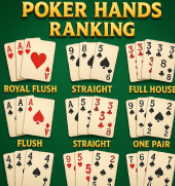
Understanding which combinations rank highest gives you a roadmap for pre-flop decisions. These ten holdings represent the cream of the 169 unique starting combinations.
Nothing beats pocket aces as a starting hand. You'll receive this combination once every 221 hands, making it rare enough to celebrate. The key involves getting money in pre-flop through raises and re-raises.
Kings rank second-best, only fearing aces pre-flop. Queens follow closely, providing tremendous equity against all but two hands. Both deserve aggressive play regardless of your range or table position.
Big slick combines raw power with flush potential, making it the best unpaired combination. Understanding that Ace-King represents a drawing hand rather than a made hand prevents costly mistakes. Your kicker value dominates opponents holding weaker aces.
Jacks and tens occupy tricky territory between premium holdings and marginal ones. The solution involves position-aware hand selection and cautious play when overcards appear.
|
Rank |
Hand 🃏 |
Nickname 🎲 |
Win % 📊 |
Strategy 💡 |
|
1 |
AA |
Pocket Rockets 🚀 |
85.3% |
Always raise/re-raise |
|
2 |
KK |
Cowboys 🤠 |
82.4% |
Aggressive pre-flop |
|
3 |
|
Ladies 👑 |
79.9% |
Raise any position |
|
4 |
JJ |
Hooks 🎣 |
77.5% |
Position dependent |
|
5 |
AKs |
Big Slick ♠️ |
67.0% |
3-bet frequently |
Beyond the top ten, understanding broader categories helps evaluate unfamiliar situations. Every two-card combination falls into groups with predictable characteristics.
All thirteen pocket pair ranks share one trait: they're already "made hands" before the flop. Higher pairs play for pure value, while smaller ones rely on flopping sets. The probability of hitting a set sits around 12% by the river.
Connectors like 98 suited offer multiple ways to make powerful holdings. These suited cards can become straights, flushes, or straight flushes given the right board. Play them in position and in multiway pots where you can realize equity cheaply.
Broadway hands contain two high cards ten or higher without matching suits. They make top pairs with strong kickers but lack flush potential. These Texas poker hands work best from late position.
Hands like A5 suited carry special value: nut flush potential. When four cards of your suit appear, holding the ace guarantees the best possible flush. This adds significant value to otherwise marginal hole cards.
Position affects every hand's profitability. The same cards that warrant folding under the gun become raising candidates on the button.
Early position demands extreme discipline because up to eight players act after you. Only premium pairs, big aces, and best broadway combinations justify opening from UTG.
Middle position allows slightly wider ranges. You can add medium pairs, connectors, and more broadway combinations to your opening selections.
The button represents poker's most profitable seat. Your holdem hands become playable even with moderate strength. This aggressive play accumulates chips without showdown risk.
|
Position 🪑 |
Raise 📈 |
Call 📥 |
Fold 🚫 |
Aggression 🔥 |
|
UTG |
AA-QQ, AKs |
None |
Most hands |
10% |
|
MP |
AA-99, AK-AJ |
88-66 |
Weak aces |
18% |
|
Button |
AA-22, Broadway |
Marginal suited |
Complete junk |
40%+ |
Certain combinations look attractive but consistently lose money. Recognizing these traps prevents costly leaks.
These hands seduce beginners because they contain an ace. However, offsuit small aces create dominated situations constantly. The kicker problem makes these poker starting hands extremely unprofitable.
Hands like K6 or Q5 offer the worst of both worlds. They rarely make straights and create weak top pairs. Professional players instantly muck these regardless of position.
Over thousands of hands, playing weak holdings guarantees losses. The rare times you crack aces with junk can't compensate for consistent losses. Folding weak combinations protects your stack.
The best players constantly adjust their ranges based on table conditions and opponent tendencies.
Against tight opponents, you can profitably open wider and steal blinds frequently. Loose opponents call everything, meaning you should tighten up and value-bet when you connect with best Texas Holdem hands.
Deep stacks increase implied odds, making speculative hands more valuable. Short stacks favor high-card strength since fewer chips go in post-flop.
Multi-way pots reward hand strength since more opponents means someone likely has something. Heads-up battles swing toward aggressive play and fold equity.
Understanding the mathematics behind poker hands Texas Holdem reveals why certain plays prove profitable long-term.
How many possible starting hands in Texas Holdem include two aces? Exactly six combinations exist, creating that famous 1-in-221 frequency. This rarity makes aces genuinely special.
Holding any pocket pair gives roughly 11.8% chance of flopping three-of-a-kind. When you do flop sets, you'll win approximately 90% of showdowns against single opponents.
Suited cards outperform offsuit counterparts by roughly 2.5-3% in equity situations. This edge comes from occasional flush completions.
|
Hand 1 🃏 |
Hand 2 🃏 |
Win % 📊 |
Term 🎯 |
|
AA 🚀 |
KK 🤠 |
82% vs 18% |
Dominated |
|
AKs ♠️ |
QQ 👑 |
46% vs 54% |
Coin flip |
|
JJ 🎣 |
AK |
57% vs 43% |
Slight favorite |
Theory means nothing without application. Putting these concepts into practice transforms knowledge into profit.
Start at lower Texas Holdem poker hands limits where mistakes cost less while you internalize proper pre-flop strategy habits. Focus entirely on discipline during practice sessions, folding everything outside your planned hands Texas Holdem.
Once discipline becomes automatic, move up stakes while maintaining proper fundamentals. The best starting hands in poker remain constant regardless of limit, but execution improves with experience at Lucky Tiger.





































































.png)
















 slots.png)










.png)












.png)













.png)







































.png)