





If you have ever watched a roulette wheel spin and wondered why that green slot carries so much weight, you are not alone. The roulette green payout is one of the most misunderstood concepts for new players, yet it is the heart of how casinos maintain their mathematical edge. This guide breaks down what happens when the ball lands on zero, what you actually win, and why the green pocket changes the odds for every bet on the table.
The green sector is not just a visual accent. It is, mathematically, the reason the casino always comes out ahead in the long run. Every bet on the layout is calculated around this pocket, and its presence shifts the true odds just enough to give the house a reliable advantage. That is the house edge in its most visible and tangible form.
Without zero, a red/black bet would be mathematically even. With it, the house collects all losing bets when the ball lands on green, which is exactly how the casino profit model works. Understanding this mechanism is step one for any player who wants to make informed decisions. The green sector is what separates roulette from a true 50/50 coin flip.
The green zero was introduced in the 19th century by Francois and Louis Blanc when they created the single-zero European wheel. The color green was chosen to distinguish zero from red and black numbers, making it instantly clear this pocket belongs to a separate category. From a technical standpoint, the green pocket ensures that neither red nor black ever covers the full wheel, which is exactly what creates the house edge on all bet types.
European roulette has one green pocket (0), while American roulette adds a second (00), doubling the house edge from 2.7% to 5.26%. The zero and double zero (0/00) might look like small additions, but their combined impact on your bankroll is mathematically substantial across any real session. The double zero was added by American casinos in the 19th century to increase profitability, since European single-zero wheels were considered too player-friendly.
When the ball lands on green, all standard even-money bets (red, black, odd, even, 1-18, 19-36) lose immediately in most standard games. The green pocket does not count as red or black, does not count as odd or even, and does not fall into either number range on the layout. The green sector sweeps all those bets off the table at once, which is precisely how it generates the house edge.
A straight-up bet on zero pays the same as any other single number bet: 35 to 1. Place $10 on zero, the ball lands there, and you receive $350 in winnings plus your original $10 back. The green roulette payout structure follows the same formula applied to all straight-up bets, regardless of which number you choose.
However, the probability of hitting zero is 1 in 37 on a European wheel and 1 in 38 on an American wheel. The payout of 35:1 is below the true odds in both cases, and that gap is exactly where the house edge lives. While the return feels generous when it hits, the math is working against you every spin.
The roulette green payout on a straight-up bet is always 35 to 1, paid directly by the dealer when the ball lands on 0. The bet is placed directly on the 0 or 00 printed on the felt, with no special procedure required. The mechanics are identical to betting on 17 or 32; what makes zero unique is its color implications for every other wager on the layout.
The 35 to 1 odds apply consistently across standard European and American roulette, whether at a physical table or online. For the classic straight-up zero bet, 35:1 is the universal standard unchanged since the 19th century. Some novelty variants offer different structures, but altered zero payouts are not found in mainstream online roulette today.
You do not have to commit to a straight-up zero bet to include green in your coverage. A split bet between 0 and any adjacent number pays 17:1, while a street bet covering 0-1-2 or 0-2-3 pays 11:1. The basket bet in American roulette covers 0, 00, 1, 2, and 3 for 6:1, but carries the highest house edge on the table at 7.89%, making it one of the worst bets in the game. The payout on green roulette follows the same 35:1 ratio whether you play a straight-up bet or include zero in a split.
The difference between European and American roulette comes down to one extra green pocket, but that addition has serious mathematical consequences for your bankroll. European roulette gives you a 2.70% house edge, while American roulette pushes that to 5.26%, which nearly doubles your expected loss per spin. Over 100 spins at $100 each, that gap adds up to hundreds of dollars in the casino's favor, making wheel selection one of the most impactful decisions you can make.
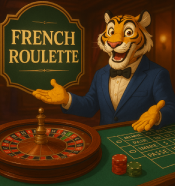
Many experienced players treat American roulette as a last resort, opting for European or French variants whenever available. The math simply favors fewer green pockets, and the comparison below makes this concrete.
|
Roulette version |
Number of green slots |
Odds of winning (%) |
House edge impact |
|
European |
1 (zero) |
2.70% |
2.70% |
|
American |
2 (zero, double zero) |
2.63% per slot |
5.26% total |
|
French |
1 (zero) |
2.70% |
1.35% (with La Partage) |
|
Triple Zero |
3 |
2.56% per slot |
~7.69% total |
The bankroll impact of triple-zero roulette is particularly harsh, and this variant is increasingly common in Las Vegas casinos. It should be avoided by anyone paying attention to expected return per dollar wagered.
Some roulette variants include rules that soften the blow when the ball lands on zero. These rules apply to even-money bets (red/black, odd/even, high/low) and are most commonly found in French roulette. They significantly reduce the effective house edge, and knowing them before you sit down can change how you structure your entire session.
Under La Partage, if the ball lands on zero and you have an even-money bet placed, you automatically get half your stake returned. A $20 bet on red gets $10 back even when green hits, cutting the house edge from 2.70% down to 1.35% on those specific bets. It is one of the most player-favorable rules in any casino table game. 💡
En Prison works differently: the dealer marks your even-money wager and leaves it imprisoned for the next spin. If your bet wins on the following round, you get your full stake back with no profit added. The mathematical effect is similar to La Partage, roughly halving the house edge on even-money bets.
American casinos rarely offer La Partage or En Prison because their profit model already benefits from the double zero. Adding these rules would reduce margins on even-money bets. European and French roulette tables are far more likely to include these protections, especially in higher-stakes rooms.
Most roulette strategies focus on red and black, but some players incorporate the green pocket into their approach. These are not guaranteed winning systems, since no strategy changes the fundamental house edge. However, they offer different ways to manage risk and spread coverage across the wheel, helping you make deliberate rather than reactive decisions at the table.
Some players place a small straight-up bet on zero alongside larger even-money bets as a partial hedge. If green hits and sweeps the even-money bet, the 35:1 return more than compensates for the loss. Betting $1 on zero and $10 on red means that if green hits, you win $35 but lose $10, netting $25, and the green payout roulette math makes this a reasonable approach to softening the impact of a green hit.
A neighbor bet on zero covers zero itself plus two numbers on each side: 3, 26, 0, 32, and 15 on a European wheel, also called zero spiel. It requires five chips placed as split and straight-up bets. It is popular among European players who want broad coverage of the zero sector.
Experienced players rarely make zero their primary target because the probability is too low for consistent returns. At 2.70% on a European wheel, zero appears once every 37 spins on average, meaning long dry spells are completely normal. Betting solely on green is high-variance play, and the 35:1 payout does not compensate enough over time to make it a sustainable primary strategy.
Every type of roulette bet carries a different payout ratio, and knowing them helps you build smarter coverage. The payout on green in roulette follows the same 35:1 structure as all single-number bets, but the green pocket's implications extend across every other bet type on the layout. Use this table as a quick reference before sitting down at any wheel.
|
Bet type |
Pocket colors involved |
Payout ratio |
Implied probability |
|
Straight-up (single number) |
Any, including green |
35:1 |
2.70% (EU) / 2.63% (US) |
|
Split (2 numbers) |
Any |
17:1 |
5.41% |
|
Street (3 numbers) |
Any |
11:1 |
8.11% |
|
Basket (0, 00, 1, 2, 3) |
Green + Red/Black |
6:1 |
13.16% (US only) |
|
Red or Black |
Red or Black only |
1:1 |
48.65% (EU) |
|
Even or Odd |
Red + Black only |
1:1 |
48.65% (EU) |
The implied probability column confirms why even-money bets do not hit at exactly 50%. The green pocket is the missing slice on every spin, and it belongs entirely to the house.
Online roulette has evolved significantly in 2026, and Lucky Tiger Casino offers a wide selection of both RNG-based and live dealer roulette variants. Players can access European, American, and French roulette from desktop or mobile, with clearly displayed payout tables and bet limits for every variant. If you want to see how the roulette green payout calculator works side by side across wheel types, Lucky Tiger gives you exactly that comparison in a single lobby. Switching between European and American tables makes the house edge difference immediately visible in practical terms.
All RNG roulette games at Lucky Tiger are certified by independent testing agencies that verify the randomness of outcomes, including how often the ball lands on green. These audits ensure the stated house edge matches actual game behavior over millions of spins. Certification results are available directly on the casino game pages for full player transparency.
Lucky Tiger live dealer roulette tables stream in high definition, letting you watch a real croupier spin a physical wheel in real time. When the ball drops into the green pocket on camera, the outcome is fully visible and verifiable. The live format tends to use European single-zero wheels, which benefits players from a house edge perspective, with chat functionality available throughout each session.
Some advanced formats let you bet on multiple wheels simultaneously, multiplying both risk and return. Triple zero roulette (000) is appearing more frequently in 2026, adding a third green pocket and pushing the house edge toward 7.69%. Knowing what's the payout on green in roulette across these variants is essential before committing chips, since the 35:1 ratio stays constant while the probability of hitting green gets thinner with every pocket added.
🎰 Ready to see the payout for green roulette in action? Head over to luckytigercasino.com and try a few spins on European roulette.































































.png)
















 slots.png)










.png)












.png)













.png)































.png)