







RTP (Return to Player) in slots is calculated based on the total amount of money wagered versus the total amount paid out to players over time. It represents the percentage of wagers that are returned to players as winnings. Understanding how RTP is calculated can help players make smarter choices when selecting games. By looking at the return to player stats, you can compare different slots and find the ones with the best long-term payout potential.
Strategy Tip:
Theoretical RTP is a long-run average from exhaustive simulations. Actual RTP fluctuates in short runs.
Our starting point is simple: every spin has a defined set of outcomes, each with its probability and payout. Add them up correctly, and you get the long-run expectation - the percentage of total wagers a game is designed to return over time. This is the backbone of the slot math formula that powers internal testing and certifications.
When we talk about the math, we're not describing a single lucky streak. We're describing averages across an enormous sample. That's why you'll see us reference simulated spins and controlled test environments. The goal is to translate complex modeling into a straightforward payout calculation that any player can follow.
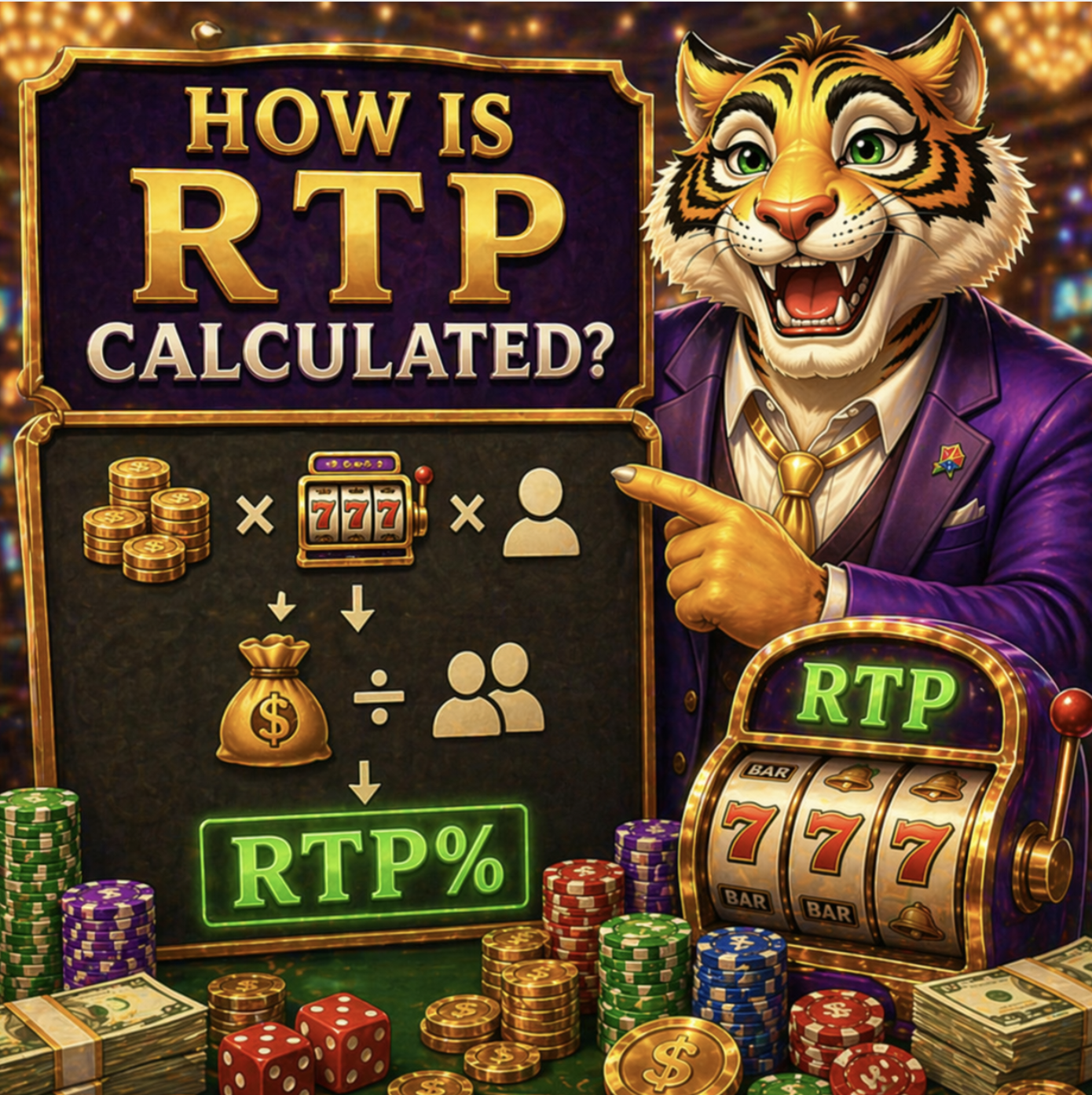
At its core, the RTP calculation formula is:
RTP = (Total Winnings Paid ÷ Total Bets Placed) × 100%.
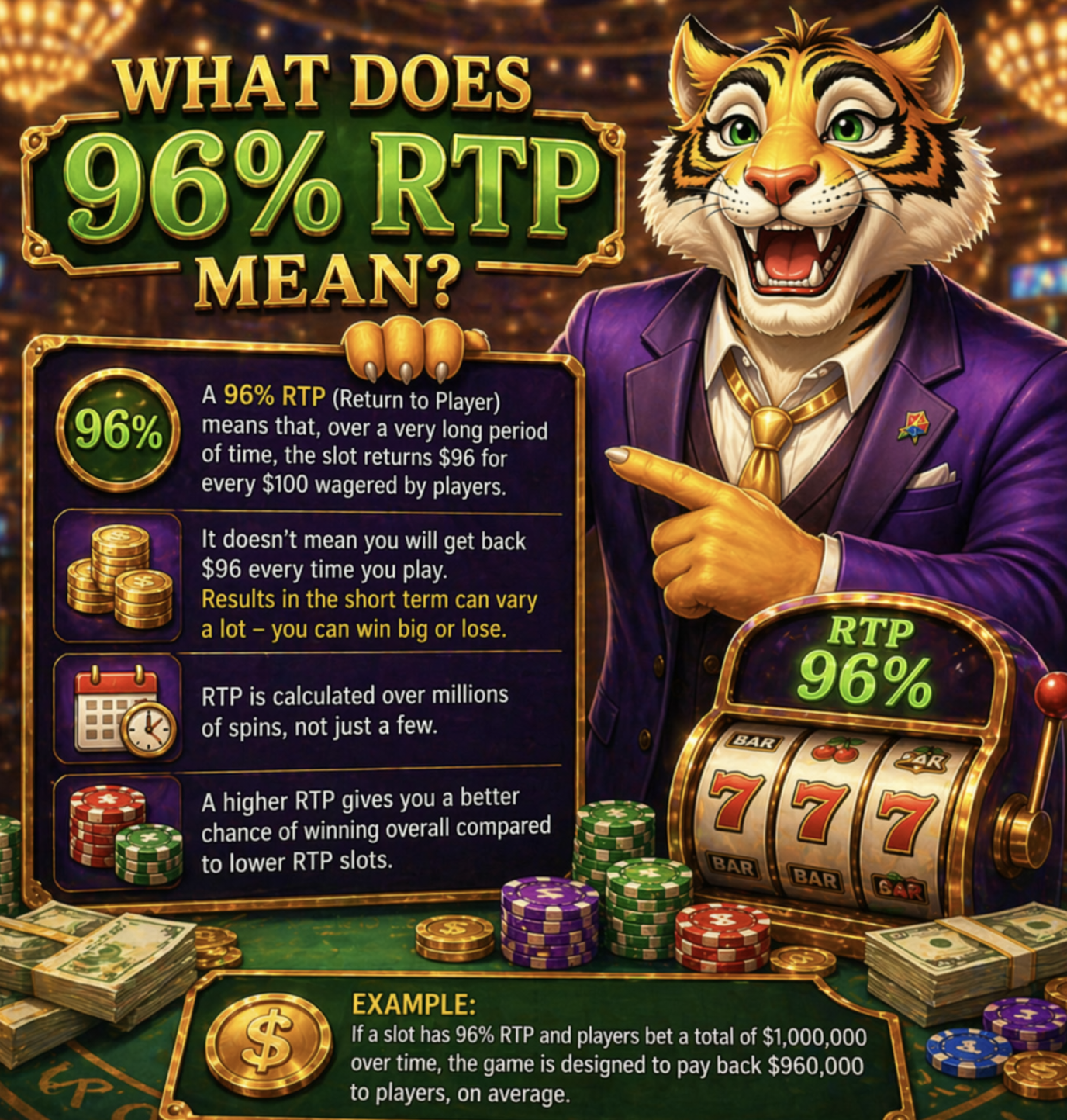
If a simulated test shows $96 returned for every $100 wagered across millions of spins, the RTP is 96%. This win percentage formula doesn't predict what you'll experience today; it describes the long-term average we target and validate during development. Internally, we verify every paytable line, reel strip, and feature trigger so the numbers add up precisely to the expected slot return estimation.
To make the ratio meaningful, the sample must be huge. We push simulations to very high spin counts, review outcome distributions, and cross-check them against the paytable's theoretical values. That way, the expected value behind how slot payout is calculated is not a guess; it's computed, checked, and documented as part of our certification process.
Theoretical RTP is what our models and lab tests produce - an exact percentage based on complete outcome coverage. Actual RTP is what real players collectively experience over time in the live environment. Over a large enough number of rounds, actual results converge toward the theoretical value, but individual sessions can deviate widely because variance drives short-term swings.
|
Aspect |
Theoretical RTP (lab model) |
Actual RTP (live play) |
|
Sample size |
Calculated over extremely large simulations. |
Emerges from real player rounds across time. |
|
Variance impact |
Smoothed by huge datasets; minimal wobble. |
High in short sessions; streaks are common. |
|
Convergence |
Guaranteed to the model's target with enough spins. |
Trends toward the target as spins accumulate. |
|
Mode dependence |
Defined per mode (e.g., base play, optional features) and documented. |
Depends on how players actually choose modes and session length. |
|
Change conditions |
Changes only with a new certified build/profile. |
Day-to-day perception changes; core math does not. |
|
Best use |
Benchmark for comparing titles and verifying math. |
Practical view of long-run outcomes in our environment. |
Key takeaways (numbered for clarity):
Did you know:
RTP calculation formula is total winnings paid divided by total bets placed, multiplied by 100 percent.
To understand why two games with the same percentage may feel different, look at the inputs that drive the number. These inputs sit inside the RTP calculation formula and define how outcomes are distributed over time. When our team tunes a title, we adjust these levers carefully so the long-run expectation holds while the game still feels lively spin-to-spin.
In practice, the elements below interact. Reel weights shape hit frequency, the paytable shapes average win size, and the test length determines how closely results mirror theory. This is the practical slot math formula behind your experience - the bridge between pure math and the on-screen action players see in our casino.
Table - Core Inputs That Drive RTP
|
Factor |
What it represents |
Effect on percentage |
Notes for players |
|
Total bets placed |
The aggregate wagered amount across the measured rounds. |
Serves as the denominator in the return ratio. |
Bet size scales outcomes but doesn't change the long-run percentage by itself. |
|
Total winnings paid |
All payouts from lines/ways, scatters, features, jackpots (if applicable). |
Serves as the numerator in the return ratio. |
Game profiles balance hit rate vs. average win size. |
|
Number of spins simulated |
The total rounds used to measure results. |
More rounds reduce variance and tighten results around the target. |
Short samples wobble; long logs mirror theory better. |
"Total bets placed" is the denominator in the payout calculation. It aggregates all wagers across the test sample, including base spins and any feature-triggered extra bets when applicable. Because paytables scale linearly with stake in most designs, changing your bet size does not, by itself, alter the long-run percentage; it only scales outcomes up or down proportionally.
Exceptions exist by design. Optional mechanics such as ante bets or bonus buys may slightly change the theoretical percentage because they alter reel weights, trigger odds, or award structures. When such features are present, our disclosures and certificates state the precise figure so players can see the game odds explained before they choose a mode.
This is the numerator in the win percentage formula and reflects everything the games pays back: line hits, ways wins, scatters, features, re-spins, and jackpots where applicable. We validate each paytable row against the underlying reel strips and state diagrams to confirm the expected frequency and average payout per outcome.
Designers balance hit rate (how often wins occur) against average win size (how much they pay). Two games can share the same RTP stats yet feel very different because of this balance. A high-frequency, low-amplitude profile produces many small hits; a low-frequency, high-amplitude profile yields rarer but larger wins. Both can satisfy the same slot return estimation target when summed across millions of rounds.
RTP is a long-run metric. The greater the number of simulated spins, the tighter the measured result hugs the theoretical target. Small samples wobble due to variance; large samples smooth those swings. For certification, we run very large batches that cover all reachable outcome states and edge cases, ensuring the measured ratio aligns with the declared percentage.
Here is how our internal workflow typically runs when we validate slot statistics:
Bonus insight:
Actual RTP trends toward theoretical value as spin count grows, but individual sessions can deviate widely.
In live sessions at our casino, results come in streaks because variance is always at work. A player may see several dry minutes and then hit a strong feature; both moments are part of the same long-run percentage. Session length, feature choices, and individual bet cycles shape how closely your results align with the long-term RTP stats.
Another reason outcomes feel different from one visit to the next is game profile. High-volatility titles cluster wins into fewer, larger spikes. Lower-volatility titles distribute more small wins across many spins. Both profiles can satisfy the same target when you look at aggregated slot statistics, but they "tell the story" differently spin-to-spin.
Short samples wobble. Ten or even a hundred rounds are not enough data to reflect the long-run expectation; most sessions are simply too brief. That's why two friends can play the same title for a few minutes and report different experiences. Each has sampled a tiny slice of the distribution.
Player choices matter too. Optional modes such as ante bets or feature buys can shift hit rates and timing. Those modes may slightly alter the model's percentage, and we disclose those figures so your decisions match your goals. Understanding how slots payout is calculated over very large samples helps set realistic expectations for any single evening.
Quick checkpoints to read results the right way:
Demo rounds use virtual credits but the math core is typically the same when the feature set is identical. If a demo disables, enables, or modifies certain mechanics (for example, feature buys or progressive contributions), the theoretical percentage may differ for that mode. Wherever a mode changes the model, we publish the figure so you can compare payout calculation across options.
Perception differs as well. In demo, players often take more risks or Play longer strings of spins, which naturally pushes results closer to the model's average. With cash, session lengths and risk choices vary more, so outcomes feel less stable. Keeping slot math explained in mind - large samples converge; small samples swing - helps frame the experience.
Tip list for consistent evaluation (numbered):
Because RTP is a single percentage, it's easy to read too much into it or expect it to predict short-term outcomes. In reality, it's a long-run expectation built on huge samples and fixed game logic. The percentage helps you compare titles, but it does not "schedule" wins or smooth out streaks in live play.
From our side as an operator, we use certified builds whose paytables, reel strips, and feature logic are locked. Internal audits and external lab checks ensure the math lines up with the design. That's why we frame game odds explained as a matter of verified models, not daily tuning knobs.
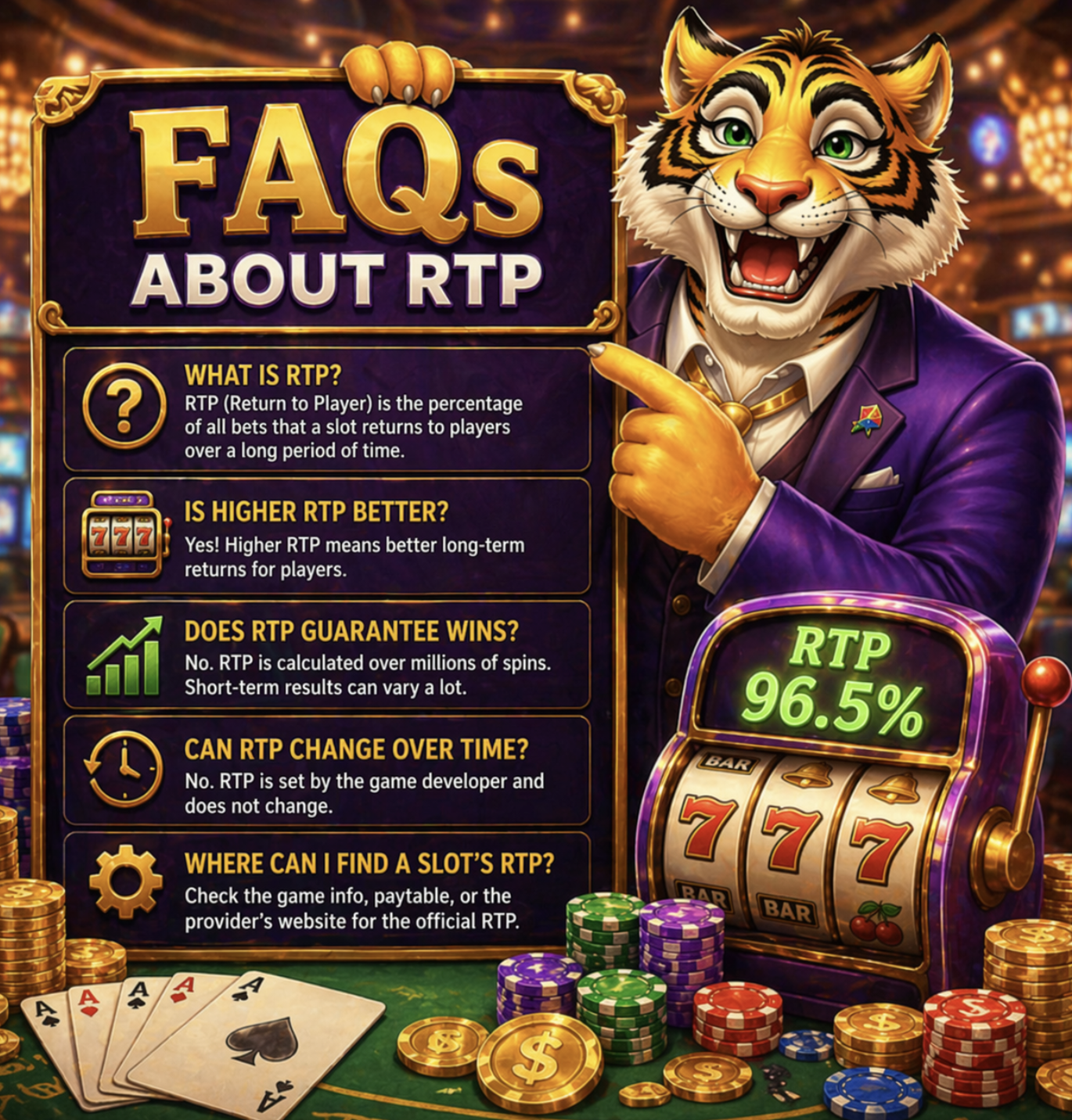
We don't. Once a title is certified and deployed, its math model is fixed. The paytable, symbol mapping, and feature probabilities remain the same from day to day. If a developer releases alternative math profiles for different markets, those arrive as separate versions and go through their own approvals. That's a change of build, not a live-slider tweak after breakfast.
What sometimes shifts - and fuels this myth - is perception. Progressive jackpots grow with contributions and can be won at any moment, so the top-line potential you see in the lobby changes even though the underlying payout calculation remains the same. Promotions and player behavior also move results short-term, but the model behind your game does not quietly drift overnight in our casino.
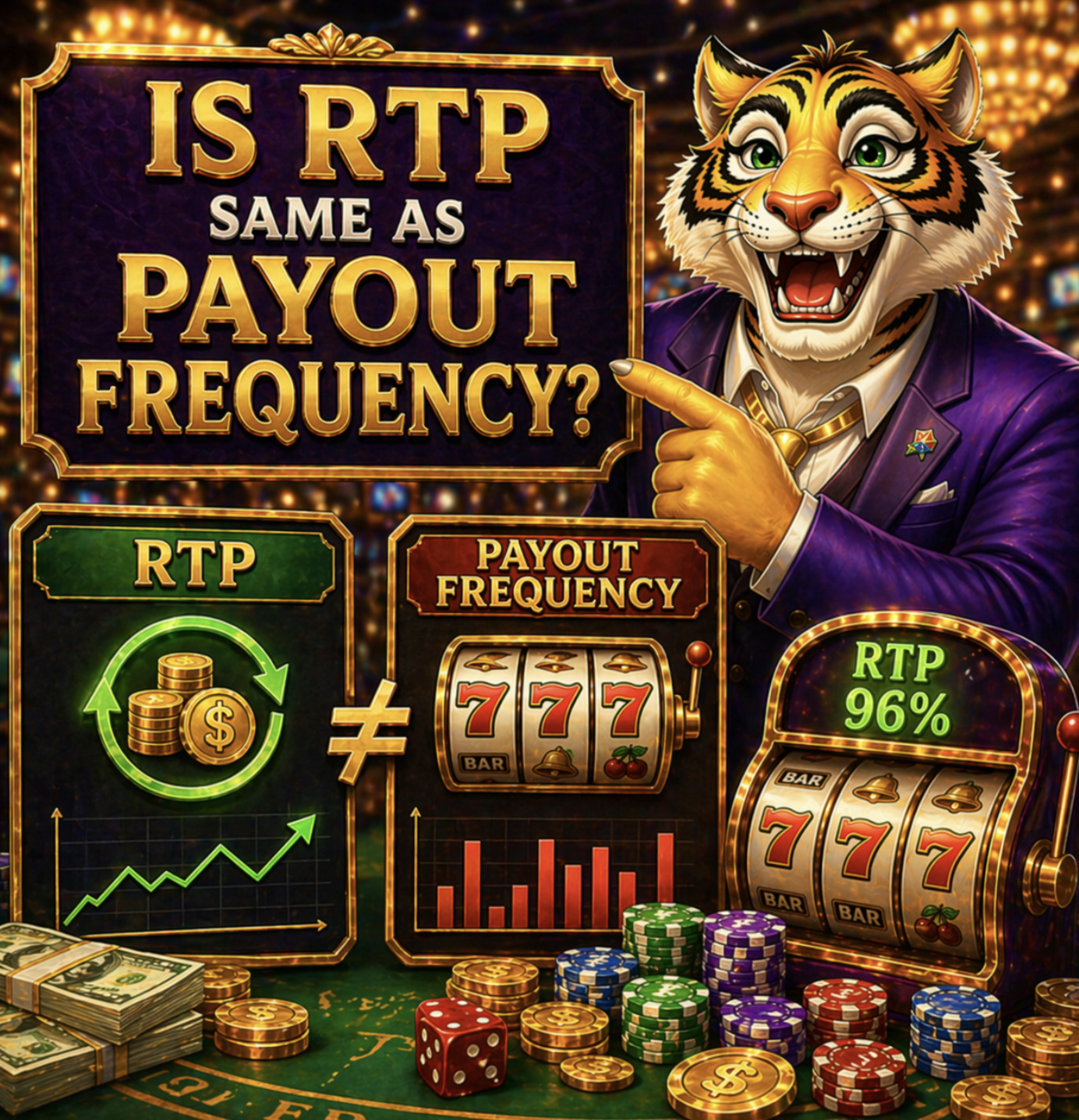
RTP describes long-run average return; payout frequency (hit rate) describes how often wins occur. A title could pay small amounts very often or pay larger amounts less often and still land on the same percentage when you average millions of spins. That is why two games with identical win percentage formula targets can feel dramatically different session-to-session.
Think of hit rate as rhythm and RTP as melody. Rhythm tells you how frequently something happens; melody tells you the overall shape across time. High-volatility designs cluster value into rarer spikes, while lower-volatility designs spread value across many small wins. Both routes reach the same long-run destination, and that's the essence of game math explained in practical terms.
Attention:
Theoretical RTP changes only with a new certified build or profile. Core math does not change daily.
































































.png)
















 slots.png)










.png)












.png)













.png)








































.png)