







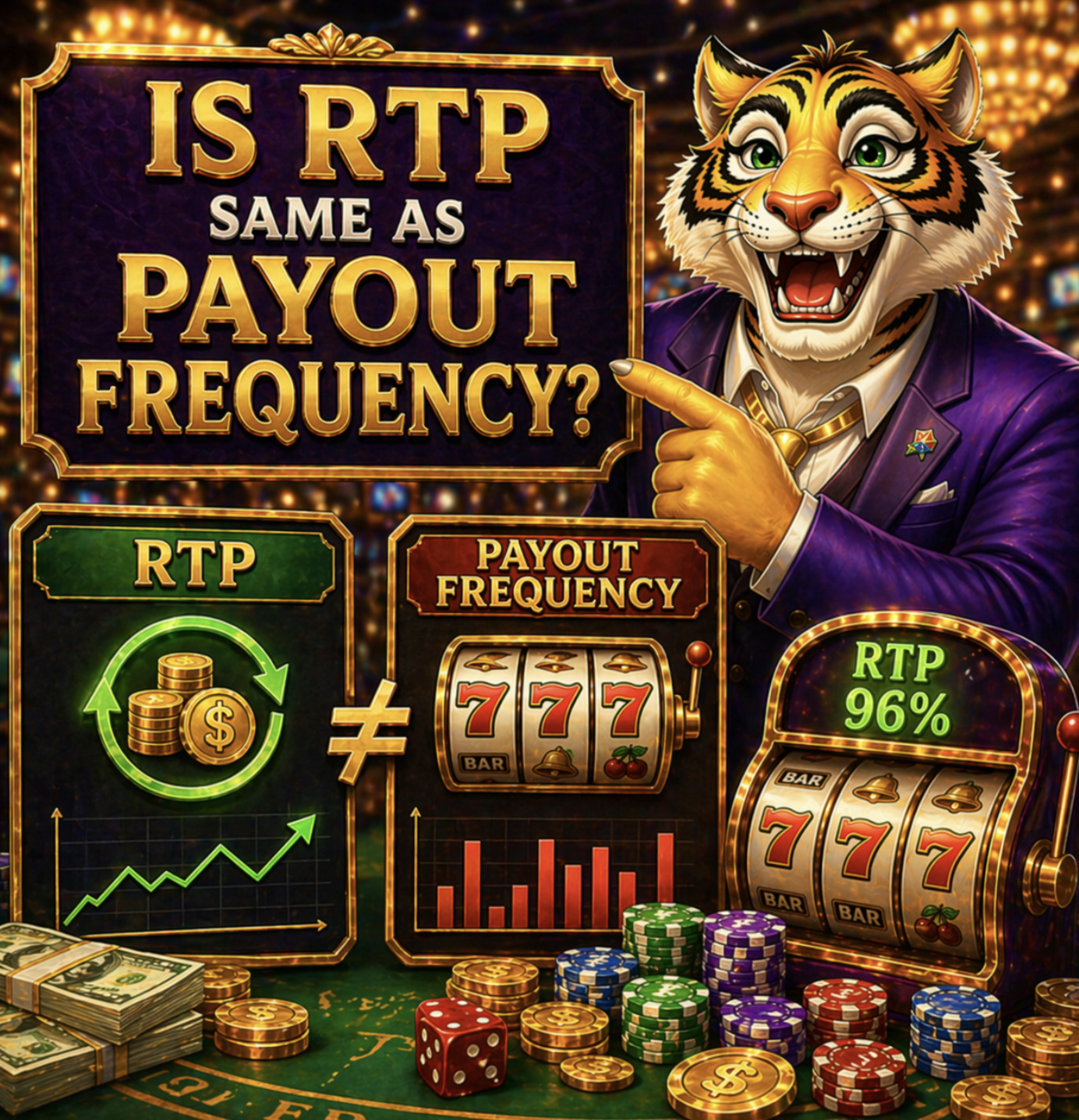
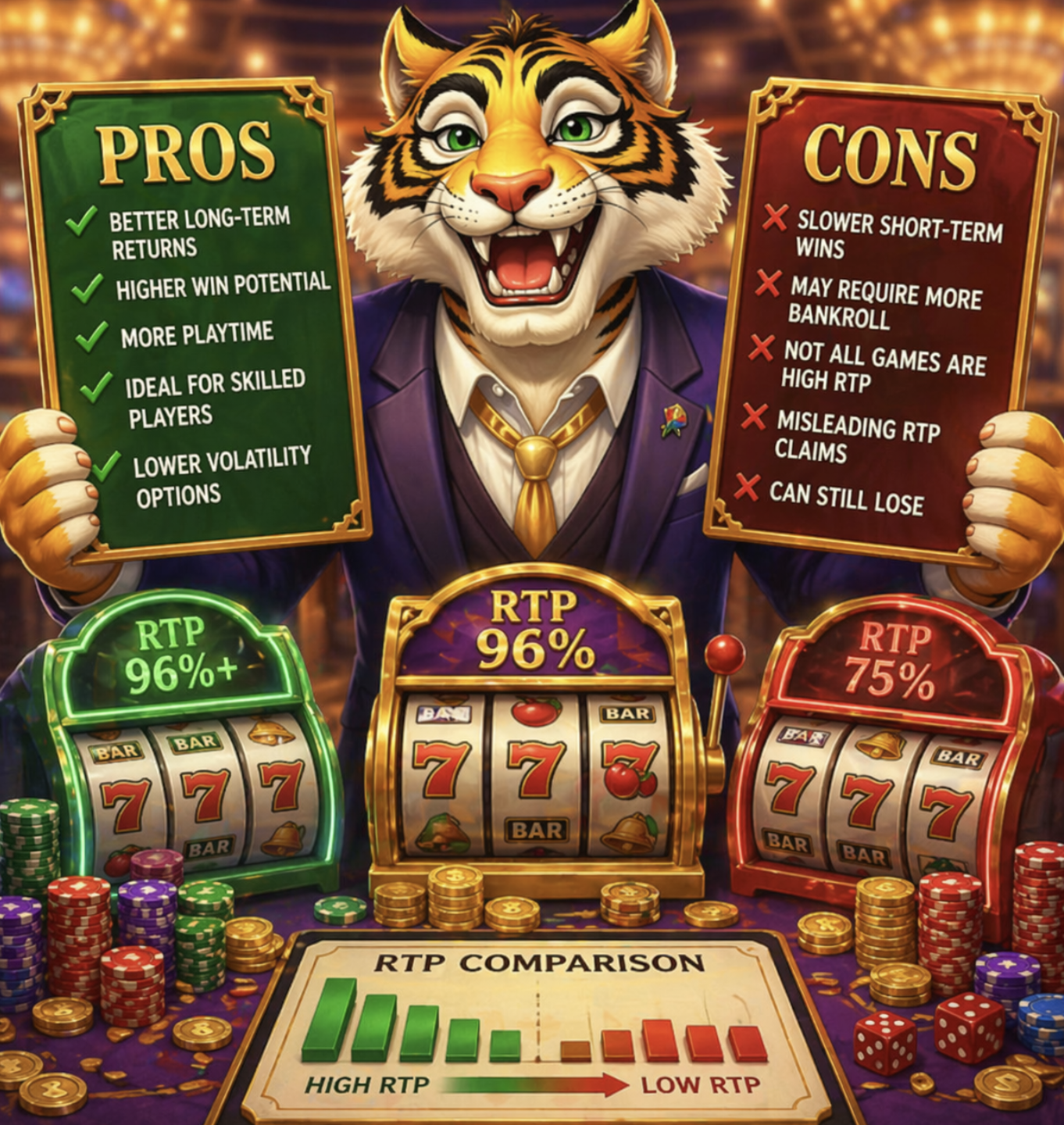
High RTP slots are popular for players seeking better long-term returns, as they offer a higher percentage of payouts over time. These games generally provide a more favorable chance of winning, making them appealing to those who prefer a steady and consistent gaming experience.
Strategy Tip:
Pair a high volatility thrill pick with a steady low variance earner to smooth bankroll.
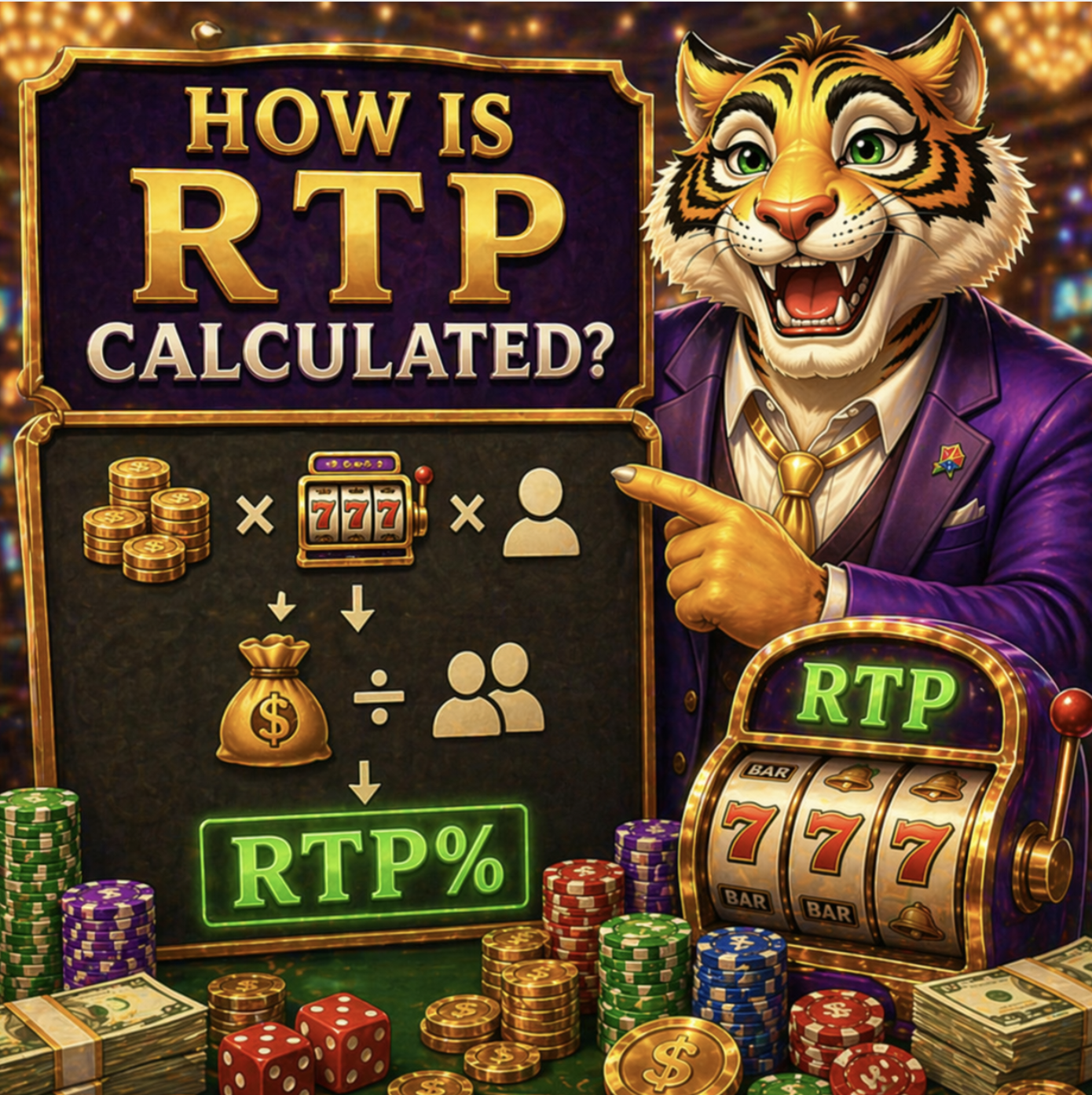
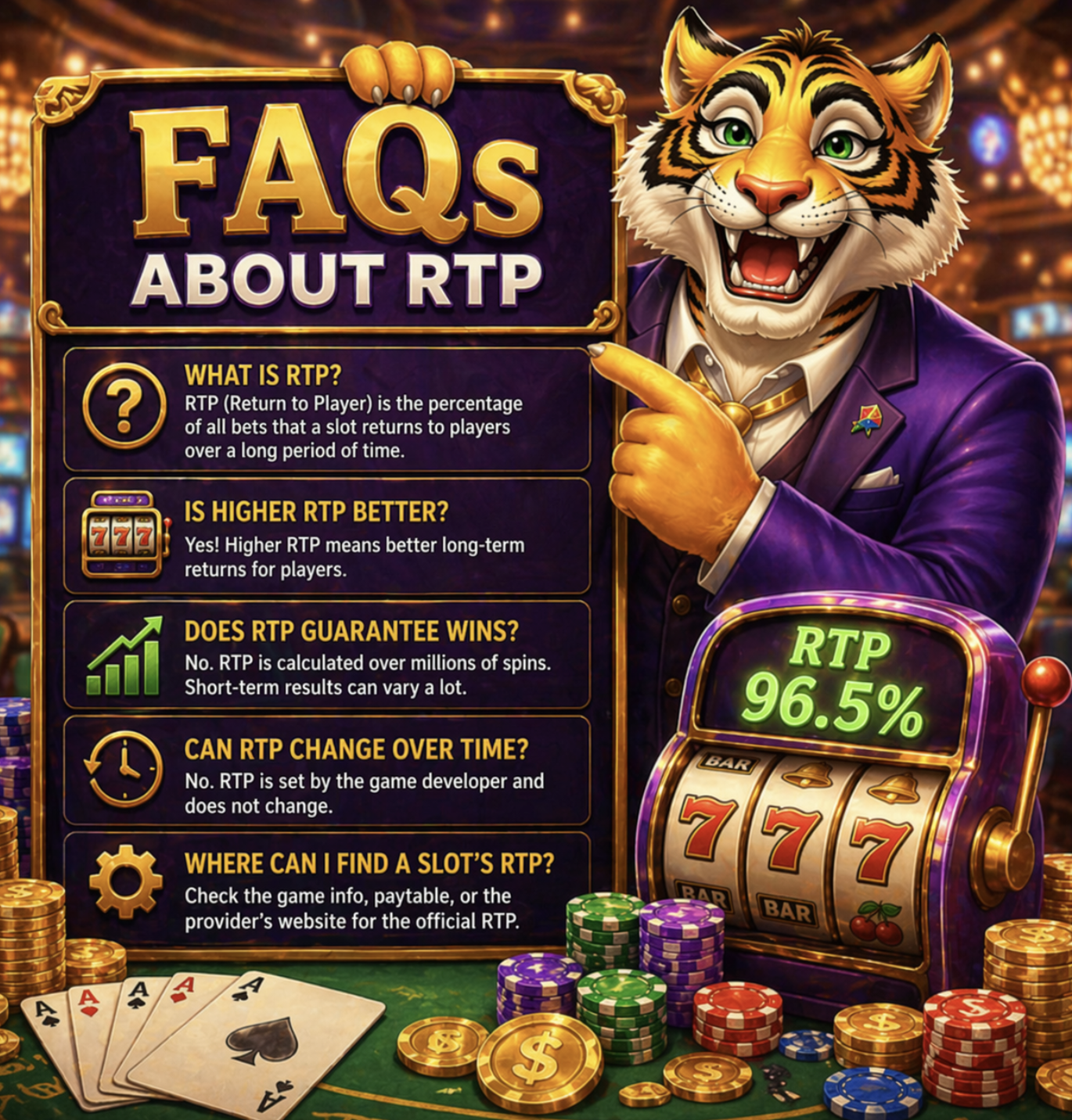
In our casino lobby, return-to-player (RTP) is displayed right on the game tile so you can choose with confidence before you spin. At its core, high RTP slots are designed to return a larger share of total wagers to players over the very long run, which supports smarter strategy and calmer bankroll planning Play. RTP doesn't "rig" short sessions or promise streaks; it's a transparent metric that helps you filter games by mathematical friendliness while still enjoying the theme, sound, and features - clear advantages of slot games that mix entertainment with measurable odds.
Players gravitate to higher figures because they compound small edges over time. The advantages of high Return to Player games include a lower theoretical loss rate per currency unit staked, making exploratory play - testing features, betting sizes, and session lengths - much more sustainable. This also pairs well with bankroll rules and slot payout benefits like stable base-game returns that keep you engaged between feature rounds.
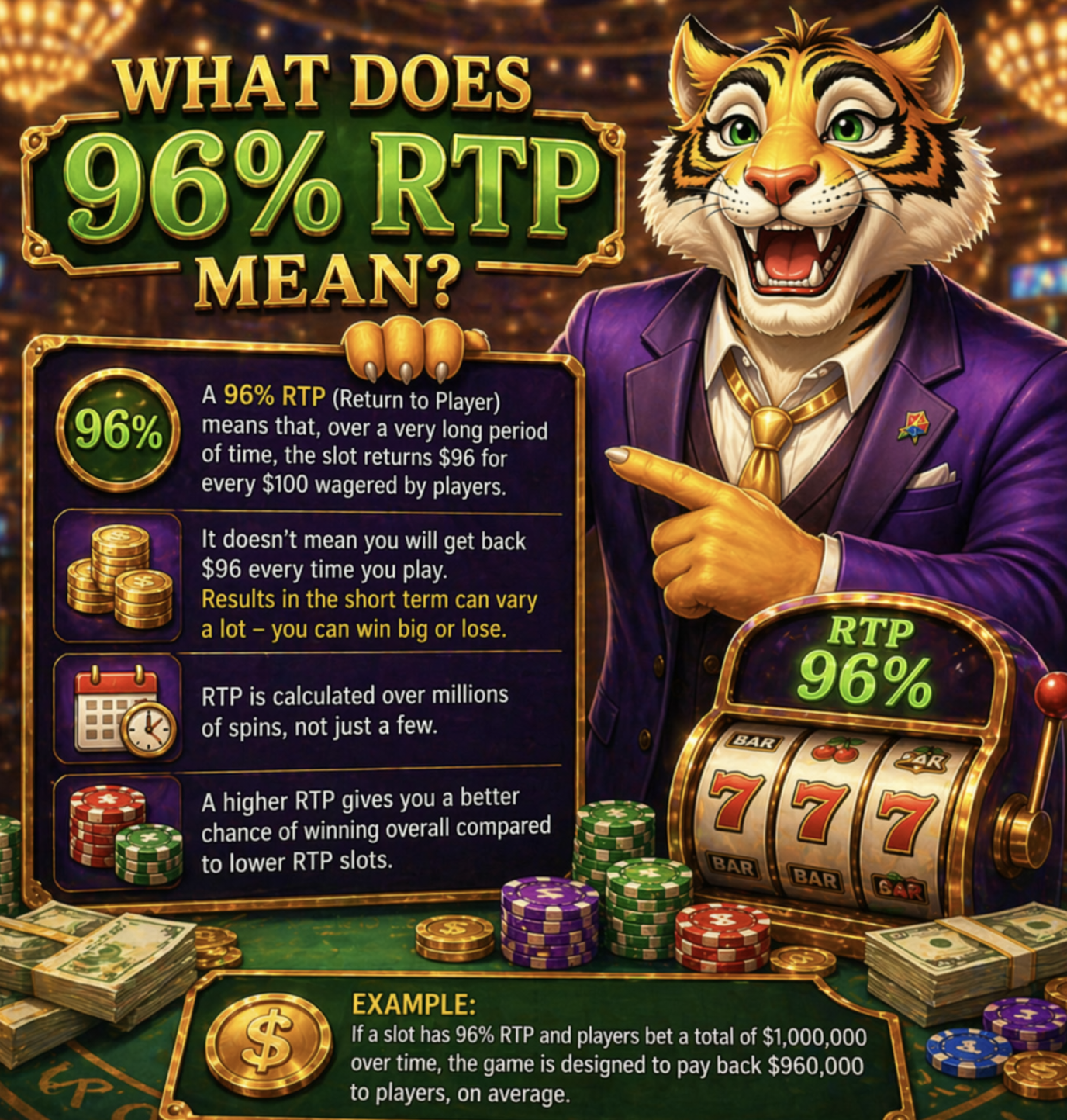
In practice, anything at or above 96% is commonly treated as "high," with some standout titles posting 97-99%. A higher figure doesn't erase variance, but it does shift the long-term expectation in your favor. Understanding where a title sits relative to that bar helps you weigh game payout pros and cons: higher payback over time versus the trade-offs a designer might make elsewhere (for example, pacing of bonuses or top-end prizes).
Did you know:
Mega Joker reaches 99 percent RTP only with optimal supermeter strategy and correct bet settings.
High return games reward patience and planning. By shaving the house margin, they let you explore features and themes with steadier value over time. That makes long sessions feel fairer and helps you evaluate slot payout benefits without rushing decisions.
When expected payback rises, each spin carries a slightly stronger mathematical profile. Over many sessions, this compounds into clearer sustainability - one of the core advantages of high RTP slots from a player's perspective.
Because the edge against the player is reduced, high Return to Player slots align better with measured play. You still face variance, but the gap between stakes and theoretical returns narrows, improving the feel of value.
High payback pairs naturally with structure. Tie your plan to session caps and checkpoints so your budget lasts longer while you collect data for smarter strategy decisions.
Clear RTP disclosure empowers you to weigh slot payout pros and cons before committing. In regulated environments, published figures, audit seals, and game info panels provide the context you need.
Bonus insight:
Book of 99 and Blood Suckers prove modern games can exceed 98 percent RTP without feeling outdated.
Designers balance mathematics against excitement, so stronger payback can carry trade-offs. Understanding game payout pros and cons helps you see the full picture: smoother value over time, but also specific disadvantages of high Return to Player games that may affect how a session feels moment to moment.
To fund a richer baseline return, some titles trim the very top of the prize ladder. That doesn't ruin the chase, but it shifts emphasis from one huge spike to steadier medium hits - classic disadvantages of slots if you play only for headline multipliers.
A generous payback is still an average over thousands of spins. Variance can cluster outcomes, so a brief losing patch is always possible even on high RTP slots. The antidote is structure: breaks, budgets, and measured stake steps supported by simple slot strategy tips.
Catalogs vary by region, regulation, and supplier agreements. Certain high-payback versions may appear later than others or rotate out during updates. We expand our lobby continuously and surface verified figures in the info panel so you can evaluate availability without guesswork.
If more value sits in the base game, designers sometimes reduce how often premium features trigger. You still get entertainment and clarity on math, but fewer fireworks per hour is among the disadvantages of high RTP slots to consider online casino.
Attention:
Even at 99 percent RTP a high volatility game like Book of 99 can have long dry spells.
In our casino, every slot lists both RTP and volatility so you can align picks with your slot game strategy. Use Return to Player to gauge long-run value and volatility to read the swing profile. Comparing models side by side clarifies game payout pros and cons - whether you want steadier sessions or adrenaline-charged spikes with longer droughts.
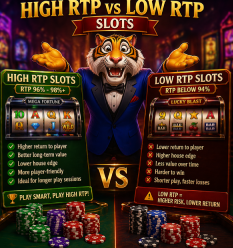
Higher payback trims the expected cost of entertainment per spin, which supports longer sessions and structured planning. Lower payback can still feel exciting, but it generally burns budget faster and relies more on outlier features to "catch up." If you track results over time, the higher figure usually produces better session endurance, which many players view as practical value rather than hype.
When to choose:
Volatility describes spread, not generosity. You can find high-volatility titles across many payback levels. A volatile model clusters wins and can deliver big spikes with longer gaps. By contrast, high RTP slots often feel steadier in the base game, but they can still be volatile if the design funnels more value into rarer features. Match the swing you enjoy to a plan you can stick to, then let Return to Player refine the choice.
Quick comparison table (for orientation only):
|
Category |
High RTP (≥96%) |
Low RTP (<96%) |
High Volatility |
|
Expected return (long run) |
Stronger |
Weaker |
Varies by RTP |
|
Typical hit feel |
Smoother baseline |
Sharper drops |
Long gaps, larger spikes |
|
Feature pacing |
Moderate/consistent |
Reliant on big features |
Infrequent, high-impact |
|
Top-end potential |
Often moderate |
Can be tuned high |
Often very high |
|
Best for |
Endurance, testing plans |
Theme-first choices |
Peak-chasing with discipline |
|
Mindset |
Track data, adjust stakes |
Tight time/budget caps |
Strong stop rules and logs |































































.png)
















 slots.png)










.png)












.png)













.png)






































.png)