




If you've ever wished you could see what the dealer is hiding, double exposure blackjack is the game you've been looking for. This variant puts both of the dealer's cards face-up on the table before you make a single decision. The visible advantage sounds massive — and it is — but the casino doesn't just hand that edge over for free. Understanding how the rules are structured around this transparency is what separates players who win sessions from those who burn through their bankroll in minutes.
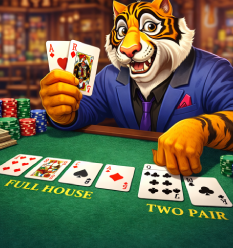
Double exposure blackjack is a variant where the dealer's full two-card hand is shown to every player from the very start of each round. There's no guessing, no reading body language, no educated assumptions — you see exactly what you're up against before you act.
In standard blackjack, the dealer's hole card stays face-down until all players finish acting. That single hidden card creates almost all the tension and strategic complexity of the classic game. In this version, the dealer's hole card is gone as a concept entirely — both cards are flipped immediately.
Knowing the dealer's total reshapes nearly every choice you make. Hand probability calculations become straightforward — instead of estimating what the dealer might have, you know exactly what they have. Decisions that feel risky in standard blackjack become mathematically clear here.
Double exposure was designed for players who find standard blackjack too slow or too dependent on incomplete information. The format was built to create faster decisions and a more aggressive play style. High-action players who prefer certainty over guesswork took to it quickly, and it spread through both land-based and online formats in the 1990s and 2000s.
No casino offers a free lunch. When the house gives you both cards face-up, it takes something back through rule constraints that shift the balance back in its favor. These adjustments are non-negotiable in virtually every version of this game.
This is the biggest financial hit for players. In classic blackjack, a natural pays 3:2 — that's $15 on a $10 bet. In this variant, payout variations (1:1) replace the traditional bonus payout. Your blackjack wins the same as any other winning hand. Over hundreds of sessions, this difference compounds significantly and is the primary way the house edge stays healthy despite the information advantage you receive.
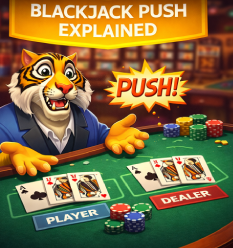
In standard blackjack, a push (tie) means you get your bet back. Here, dealer wins ties is a universal rule — if you both land 18, the dealer takes your chips. The only exception in most versions is when both you and the dealer have blackjack, which results in a push rather than a dealer win. This single rule adjustment adds roughly 8–9% to the house's favor, which is then partially offset by the card visibility benefit.
Attention:
In Double Exposure, the dealer wins ALL ties except blackjack-vs-blackjack. This single rule adds ~8–9% to the house edge — never underestimate its impact!
Most versions of double exposure blackjack game impose strict rule constraints on when you can double down and how many times you can split. Doubling is often limited to hard totals of 9, 10, or 11 only. Splitting may be restricted to once per hand, and re-splitting aces is usually off the table entirely. These restrictions exist because full information makes aggressive moves far more reliable — the casino limits them to protect its margin.
Rule |
Standard blackjack |
Double exposure |
Impact |
🃏 Dealer cards visible |
One card only |
Both cards shown |
Major player advantage |
💰 Blackjack payout |
3:2 |
1:1 even money |
Major house advantage |
🤝 Ties |
Push (player keeps bet) |
Dealer wins (except BJ tie) |
Significant house advantage |
✂️ Splitting |
Usually 2–4 times |
Often once only |
Minor house advantage |
➕ Doubling down |
Most totals allowed |
Hard 9, 10, 11 only |
Minor house advantage |
🎯 Insurance |
Available |
Usually removed |
Neutral/minor |
When the dealer is sitting on 20, many players freeze. The instinct is to stand and "not make things worse." That instinct is wrong here — and understanding why is where real strategy adjustments begin.
Against a dealer 20, standing on anything less than 20 is a guaranteed loss. There's no hope in passivity. You must hit repeatedly until you either reach 20 to push (in versions that push on ties for non-blackjack hands — rare), or hit 21 to win. The "do or die" approach isn't reckless — it's mathematically forced by the information you already have.
In classic blackjack, standing on 17 is almost always correct because the dealer's hidden card creates uncertainty. Here, if the dealer shows 16 and you hold 17, you win if the dealer busts on their forced draw. The dealer must hit 16 (standard rules), and there's a solid chance they bust. Standing on 17 here is often the right play — the math of certainty replaces the guesswork that would normally push you to hit.
Splitting is most powerful when the play double exposure blackjack dealer holds a stiff total — typically 12 through 16. When you know the dealer is stuck in that range, splitting a pair of 8s or 7s into two separate hands doubles your chances of winning before the dealer even draws. This is one of the few moments where the exposed hand information directly turns a marginal situation into an aggressive opportunity.
Strategy Tip:
When the dealer shows 20, always hit — standing is a guaranteed loss. The "do or die" approach is mathematically forced, not reckless. Hit until 20 or 21!
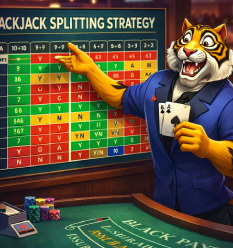
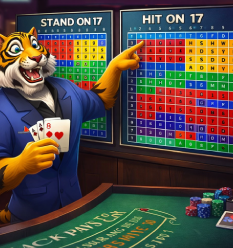
Strategy in this game is built around one simple question: what is the dealer's exact total, and what is the most likely outcome if I act aggressively? The chart below gives a quick reference for the most common situations.
Your hand |
Dealer's visible total |
Your best move |
Reasoning |
🎯 8–11 |
2–16 |
Double down |
Strong position vs. weak dealer |
📊 12–16 |
17–21 |
Hit |
You're losing otherwise |
✋ 17–19 |
12–16 |
Stand |
Dealer likely to bust |
🔄 Pair of 8s |
13–16 |
Split |
Attack a weak dealer total |
⬆️ Soft 18 |
19–21 |
Hit |
You need 19+ to win |
🃏 Any total |
Dealer 20 |
Hit to 20/21 |
Standing is a guaranteed loss |
Standard basic strategy was developed around incomplete information — specifically around never knowing the dealer's hole card. Applying it directly to this format will cost you money. The strategy adjustments required here are substantial: you'll hit hands you'd normally stand on, stand on hands you'd normally hit, and split in situations classic strategy would never recommend.
💡Print or bookmark a strategy chart specific to this variant before your first session. Using a classic blackjack chart here is like using a road map for the wrong city.
When the dealer shows a strong total like 19 or 20, passive play is losing play. Knowing that the dealer already has a strong hand removes any value from conservative decisions. Playing how to play double exposure blackjack correctly means accepting that some sessions will feel brutal — you'll hit 14 into a dealer 20 and bust repeatedly. That's part of the game, and the math still supports it.
This format has real strengths and real weaknesses. Before you commit your session bankroll, it's worth understanding both sides clearly.
Pros
Cons
The clearest benefit is decision confidence. In a classic game, standing on 16 against a dealer's 10 feels awful because you're guessing. Here, you know what you're against, and your decisions come from information rather than instinct. Players who struggle with blackjack anxiety often find this format far easier to handle mentally.
The tie rule is where this online double exposure blackjack game punishes you most. Standard blackjack pushes are a small but meaningful cushion — you break even often enough that they add up over a session. Remove that cushion entirely, and the variance swings harder. Losing a tie on a hard 20 feels different when you know you made the perfect play and still walked away empty.
The house edge in this format typically lands between 0.35% and 0.69% with optimal play — comparable to well-played standard blackjack. The visibility gain and the rule penalties roughly cancel out. Where it differs is in volatility: this game swings more dramatically session to session, even if the long-run math is similar.
Lucky Tiger offers this variant as part of its table game lineup, and the online format adds some genuine practical advantages over a land-based setting. If you're looking to play double exposure blackjack online, the platform delivers a clean, well-structured experience suited to both new and experienced players.
The online interface at Lucky Tiger displays both dealer cards clearly at the top of the screen, with totals calculated automatically. This removes any risk of misreading a physical card under casino lighting. The interface also highlights when the dealer holds a total in the 12–16 "stiff zone," making strategy decisions faster for players who are still learning.
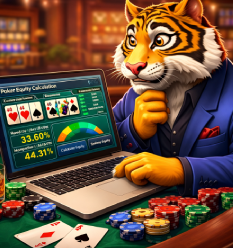
One advantage of online play is that you can run a strategy calculator in a second browser tab. Because you know both dealer cards, a hand probability calculator gives you exact percentages for each decision. This is legal and widely practiced — if you choose to play real money double exposure blackjack online, using all available tools between hands is simply smart preparation.
💡 Set up your strategy reference before starting a session, not during one. Decision fatigue makes in-session setup messy and error-prone.
Bonus insight:
Playing online lets you run a strategy calculator in a second tab — fully legal in Double Exposure. Use every tool available to maximize your edge before each decision!
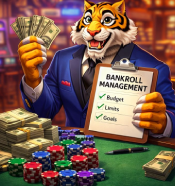
Because ties go to the dealer, short sessions carry higher risk of feeling lopsided. A 20-minute session where you push four hands — all going to the house — can wipe a session bankroll that a longer run would recover. Plan for sessions of at least 45 minutes with a bankroll that supports 60+ hands. This smooths the variance and gives the strategy time to actually perform.




















.png)








 slots.png)








.png)







.png)





.png)











.png)