







If you've ever browsed a casino lobby, you've likely seen a percentage listed next to a game - that's the RTP. Understanding this number is the first step toward making smarter choices about where to place your bets. This guide breaks down the meaning of slot payout percentage, how it's calculated, and why it should influence your game selection more than flashy graphics or bonus promises.
Strategy Tip:
Always check the game's info panel before spinning. RTP can vary between casinos for the same title.
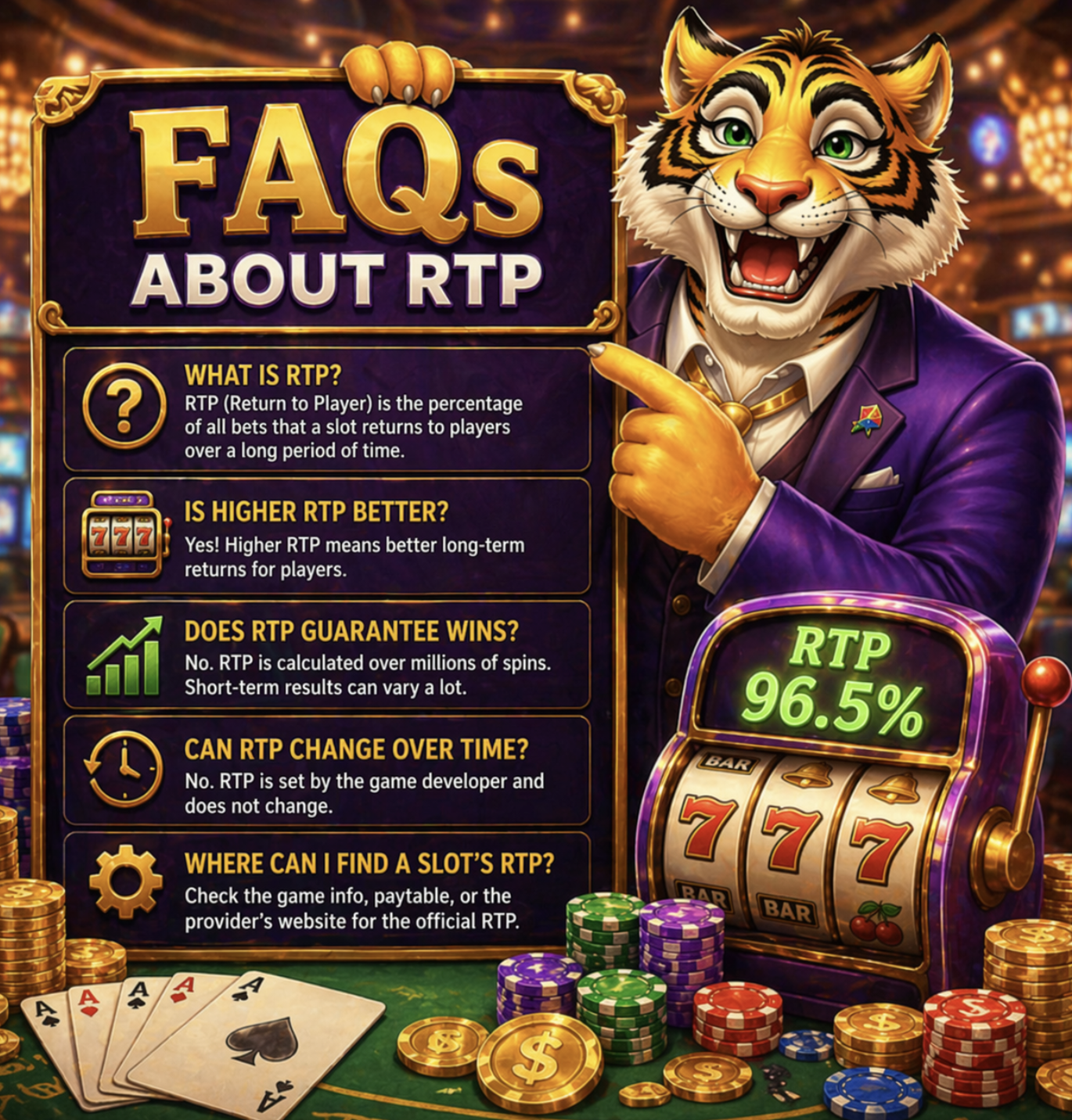
RTP stands for Return to Play. It is the cornerstone of slot machine statistics and represents the theoretical amount a game pays back to players over a very long period. While it doesn't predict what will happen in the next five minutes, it is the most reliable metric for comparing the long-term value of different online slot return rates.
RTP is expressed as a percentage. It indicates the portion of total wagers that a specific slot machine is programmed to return to players over millions of spins. It is not a reflection of your personal session but a mathematical expectation built into the game's core design by the software provider.
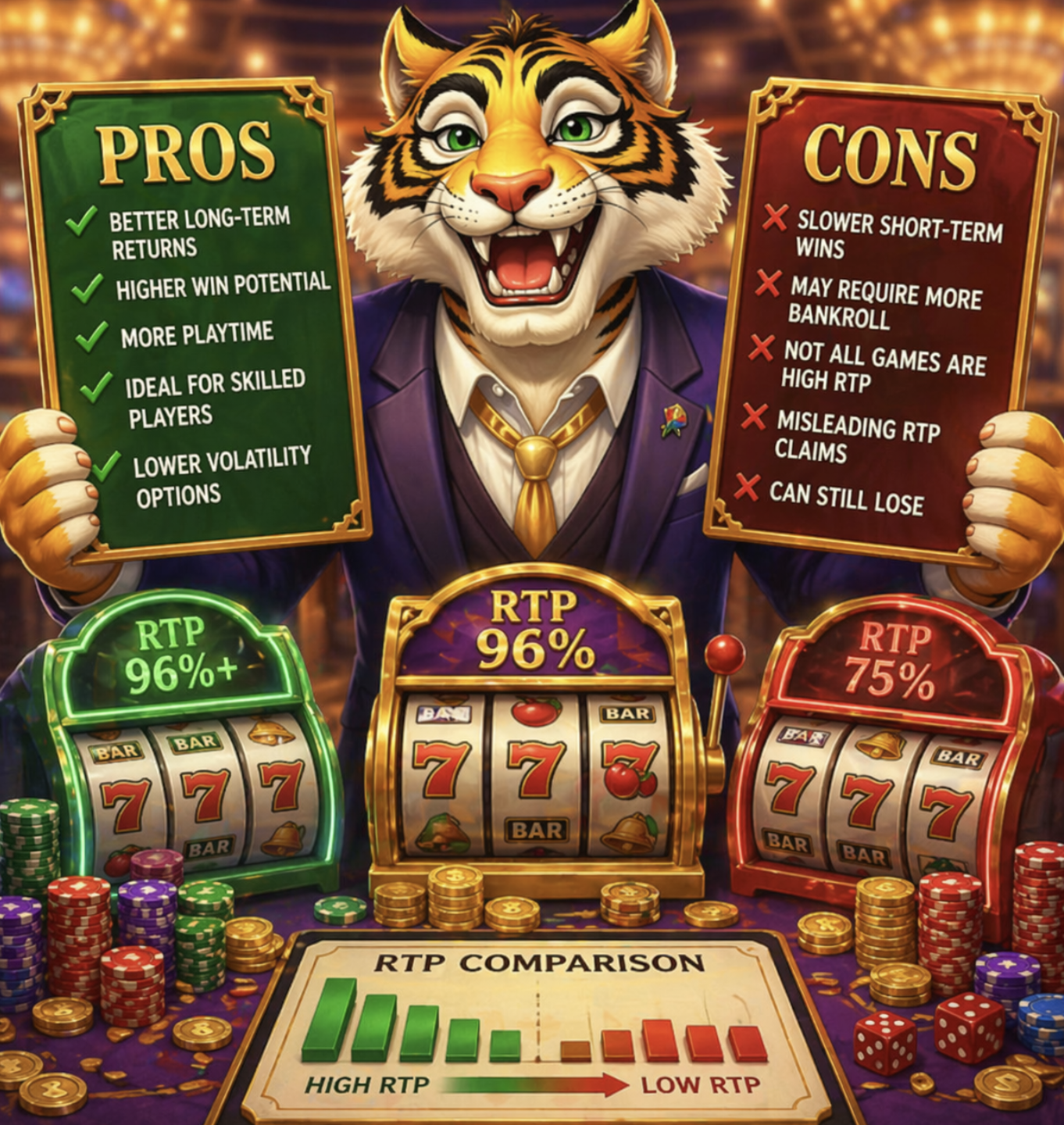
The RTP percentage matters because it directly correlates with the house edge. A higher RTP means the casino's theoretical profit margin is smaller. For players, prioritizing games with a higher slot win probability can lead to extended playtime and better value for money over the long haul compared to low-RTP alternatives.
In the current online landscape, the industry average for casino payout rate hovers around 95% to 96%. Games below 94% are generally considered poor value, while anything above 97% is classified as a high-RTP slot. Always check the game's info panel, as the average slot payout can vary significantly from one title to another.
RTP isn't magic; it's math. It works in the background of every spin, driven by a Random Number Generator (RNG). The RNG ensures that outcomes are random in the short term, but the game's paytable and symbol weights are calibrated to ensure the total payout converges toward the stated RTP over millions of rounds.
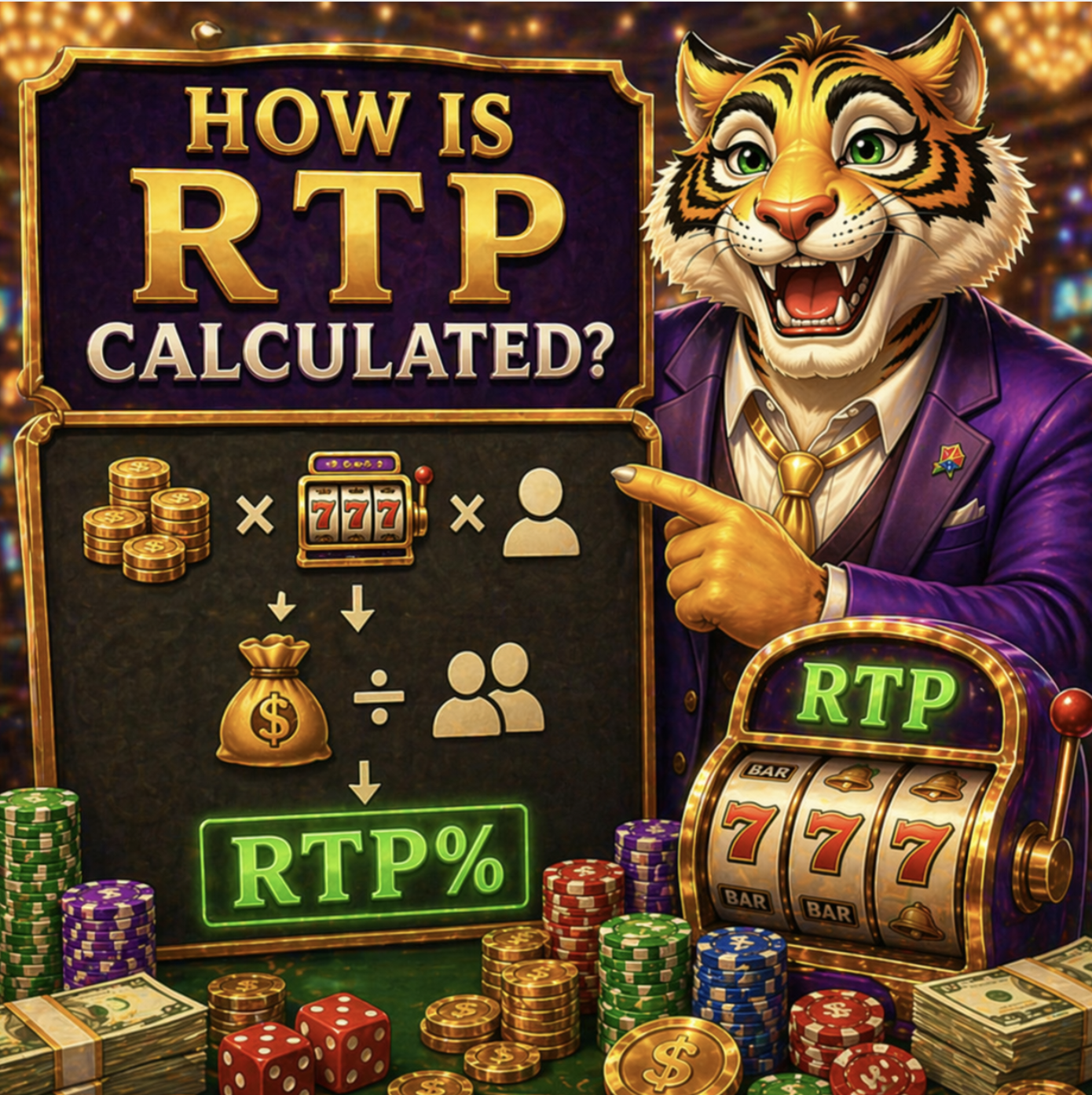
Calculating RTP involves dividing the total amount returned to players by the total amount wagered by players over a simulated (or actual) set of billions of spins. Game developers run complex algorithms to map out every possible reel combination and its corresponding payout to arrive at the final figure.
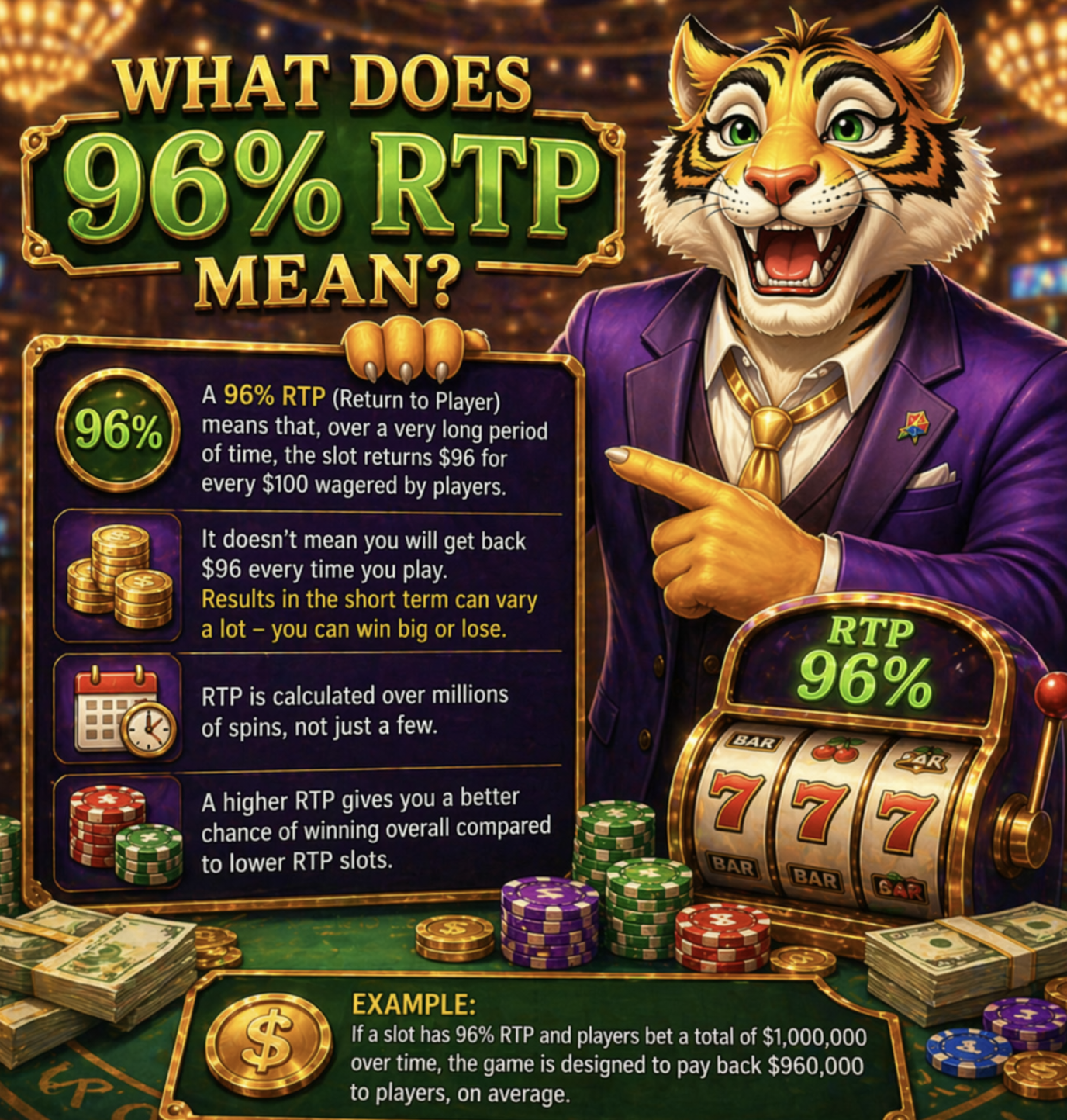
Imagine a slot with an RTP of 96%. In theory, if the total amount wagered by all players on that game is $1,000,000, the game is expected to pay out $960,000 in winnings. The remaining $40,000 is the casino's retained profit (the house edge). Remember, this is a statistical average, not a guarantee for any individual player.
The RTP displayed in the game rules is the theoretical return. Actual RTP is what the game has paid out over a specific, limited period. In the short term, actual RTP can fluctuate wildly - a game might pay out 40% one day and 150% the next. Over billions of spins, the actual return will converge very closely with the theoretical slot payout percentage.
This is the most critical distinction for players. In the short term (a single session of 100-500 spins), variance rules everything. You could win a jackpot on a 94% RTP game or lose your bankroll on a 99% RTP game. The RTP is a long-term compass, not a short-term weather forecast. It ensures the game remains profitable for the operator over years of operation.
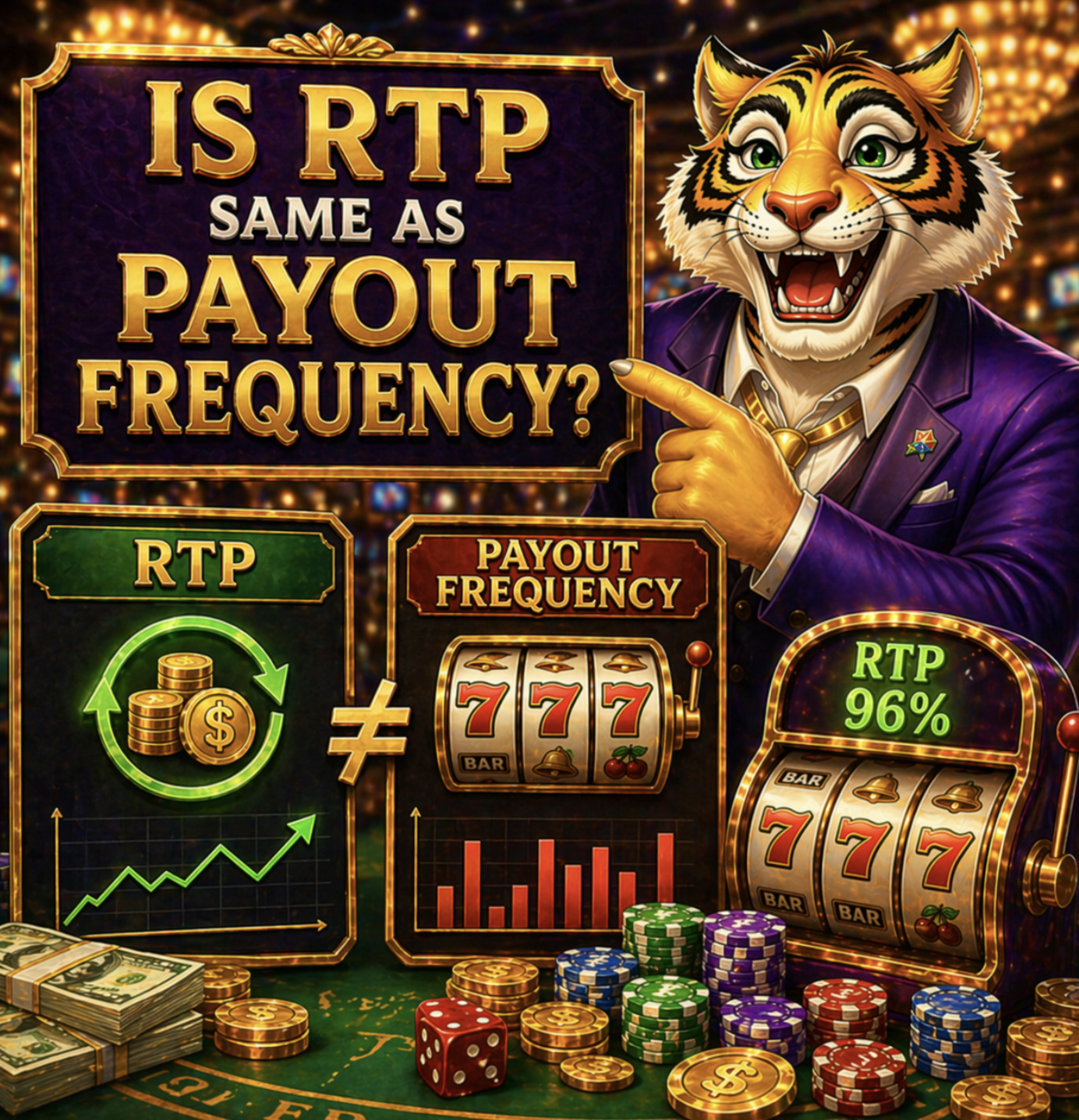
It's a common mistake to confuse RTP with how often a game pays out. Hit frequency (or hit rate) tells you how often a spin results in a win (e.g., 25% hit rate means a win roughly 1 in 4 spins). RTP tells you how much of the total money wagered comes back. A game can have a high hit frequency (lots of tiny wins) but still have a low RTP, or a low hit frequency (rare wins) but a high RTP when those wins are massive.
Did you know:
RTP is a long-term compass, not a short-term forecast. Variance rules every single session you play.
Not all RTP models are created equal. Depending on the game's architecture and the casino's agreement with the provider, you might encounter different RTP structures. Understanding these variations is key to accurate online slot return analysis.
Most modern video slots fall into this category. They have a single, fixed RTP that cannot be altered by the casino operator. This version is locked into the game files certified by testing labs like eCOGRA or iTech Labs. The RTP you see in the paytable is the only version available for that specific build.
Some game providers offer "RTP ranges." This means the casino operator can choose from several certified settings (e.g., 94%, 96%, or 98%) when installing the game. This is why the same slot might have a different casino payout rate at different online casinos. Always verify the RTP inside the game info panel rather than relying on third-party lists.
Progressive slots have a unique RTP structure. The base game typically has a lower RTP (often between 88% and 94%). A small portion of every bet (the "contribution") is siphoned off to feed the ever-growing jackpot prize. Therefore, the total RTP is split between the base game returns and the long-shot probability of winning the jackpot.
Bonus insight:
RTP and hit frequency are different. High RTP doesn't mean frequent wins—just bigger long-term value.
RTP is powerful on its own, but it becomes even more useful when compared against other slot machine statistics. You cannot fully assess a game's behavior by looking at RTP in a vacuum; you must also weigh it against volatility and house edge.
RTP defines the total size of the pie returned to players. Volatility (or variance) defines how that pie is sliced and served. A high-RTP, low-volatility game serves up many small, consistent slices (low risk). A high-RTP, high-volatility game might starve you for an hour before suddenly serving you a massive portion (high risk). Both have the same total pie size over the long run.
House Edge is the inverse of RTP. It is the mathematical advantage the casino holds. The calculation is simple: House Edge = 100% - RTP. If a slot has a 97% RTP, the house edge is 3%. While RTP is a player-friendly metric, the house edge is the business metric that ensures the casino stays in operation.
Return frequency is synonymous with hit rate. It's a measure of engagement (how often the machine makes noise and lights up), whereas RTP is a measure of value (how long your money lasts). A game designer can tune a slot to be "fun and frequent" with a 95% RTP, or "quiet and explosive" with a 98% RTP. The right choice depends entirely on your personal playing style and goals for slot win probability.
There is a lot of misinformation floating around casino forums regarding RTP. Separating fact from fiction will save you from making poor bankroll decisions and chasing patterns that don't exist in slot machine statistics.
False. In regulated markets, casinos cannot flip a switch to make a slot "tighter" on a Friday night. Changing the RTP requires submitting a new game file to the regulator and the testing lab, which is a lengthy and expensive process. While they can choose between pre-approved RTP versions for adjustable slots, they cannot manipulate the RNG in real-time.
False. As explained in the volatility section, RTP does not equal win frequency. You could play a 99% RTP slot for an hour and lose your entire deposit due to high variance. Conversely, you could hit a lucky streak on a 94% RTP slot. RTP is a long-term statistical advantage, not a short-term guarantee.
Mostly False. In 99% of cases, the demo version uses the exact same mathematical model and server logic as the real-money version. The RNG and slot payout percentage are identical. The only time a demo might differ is if a casino is using a very old, unregulated software version, but in licensed environments, demos are accurate mirrors of real-money play.
Attention:
Casinos cannot secretly rig RTP on the fly. Changes require certified game files and regulatory approval.
In a sea of thousands of slot titles, RTP is the great equalizer. It provides a standardized, objective metric to filter games before you even consider the theme or bonus features. Ignoring online slot return data is akin to buying a car without asking about fuel efficiency.
Statistically, a player who exclusively plays 97%+ RTP slots over several years will retain more of their bankroll than a player who plays 92% RTP slots. The difference in slot win probability might be imperceptible in an hour, but over 100,000 spins, the higher RTP player has a significantly lower expected loss.
RTP helps you cut through the marketing fluff. Two slots might look identical in terms of graphics and sound, but a 5% difference in average slot payout represents a massive gap in long-term value. Checking the RTP is the first step in developing a disciplined approach to casino gaming.
Regulatory bodies like the UK Gambling Commission and the Malta Gaming Authority mandate that RTP figures be clearly displayed and verified. This transparency protects players. If you play at a licensed casino, you can trust that the displayed casino payout rate has been audited by a third party and is not just a made-up number.
































































.png)
















 slots.png)










.png)












.png)













.png)







































.png)