






Every serious player knows that blackjack isn't purely about luck. With the right approach, you can transform this classic card game into a calculated pursuit where mathematics guides every decision. A blackjack strategy card serves as your roadmap to smarter play, showing precisely what action to take based on your hand and the dealer's visible card. This guide breaks down everything US players need to know about using these powerful tools at Lucky Tiger in 2026, from reading decision matrices to avoiding costly mistakes that drain your bankroll.
A blackjack basic strategy chart is essentially a visual reference tool that tells you the mathematically correct move for every possible hand combination. Instead of relying on gut feelings or hunches, you consult this grid to determine whether to hit or stand, double your bet, or split your cards. The chart accounts for both your total and the dealer's upcard, giving you a clear directive based on millions of simulated hands.
Basic strategy emerged in the 1950s when mathematicians first applied probability theory to twenty-one. Roger Baldwin and his colleagues published groundbreaking research in 1956, later refined by Edward Thorp in his famous book "Beat the Dealer." These pioneers used early computers to calculate optimal decisions, creating the foundation for every blackjack strategy basic chart used today. Their work proved that players could significantly reduce the casino's advantage through disciplined decision-making.
The mathematical edge in blackjack comes from understanding probability distributions across all possible outcomes. When you follow a basic blackjack strategy chart perfectly, you minimize the house advantage to roughly 0.5%, compared to 2-4% for players who rely on intuition alone. This reduction happens because every recommended action has been tested against millions of hand combinations, identifying which choice yields the best expected value over time.
Playing without a black jack chart is like navigating without a map. You might occasionally make the right turn, but you'll also make plenty of wrong ones. Each incorrect decision adds percentage points to the casino's advantage, costing you real money over hundreds of hands. Smart players at Lucky Tiger always keep a reference nearby, especially when learning the casino game or encountering unusual hand combinations.
Reading a chart basic strategy becomes second nature with practice. The grid organizes information so you can find the correct play within seconds, even during fast-paced online sessions. Understanding the layout means you'll never hesitate when facing tough decisions at the virtual table.
The vertical axis lists your possible hand totals or specific card combinations. Hard totals, soft totals, and pairs each have dedicated sections. The horizontal axis shows the dealer's face-up card, ranging from 2 through Ace. To find your optimal play, locate your hand on the left side, then trace across to the column matching the dealer's card.
Every blackjack play chart uses abbreviations to compress information into a compact format. "H" means hit (take another card), while "S" indicates stand (keep your current total). "D" represents double down, where you double your wager and receive exactly one more card. "SP" signals that you should split pairs into two separate hands. Finally, "SU" stands for surrender, an option to forfeit half your bet rather than play out a losing hand.
A hard total contains no Ace, or an Ace counted as one. A soft total includes an Ace valued at eleven, giving you flexibility since you can't bust with one more card. Charts separate these categories because the optimal strategy differs significantly. For example, you'd hit a hard 16 against a dealer's 10, but you'd handle a soft 16 (Ace-5) more aggressively by doubling down in certain situations.
|
Player hand 🃏 |
Dealer 2-6 |
Dealer 7-9 |
Dealer 10-Ace |
Recommended action |
|
Hard 8 or less |
H |
H |
H |
Always hit |
|
Hard 9 |
D (3-6), H otherwise |
H |
H |
Double when dealer weak |
|
Hard 10 |
D |
D |
H (vs 10, A) |
Double against most |
|
Hard 11 |
D |
D |
D or H (vs A) |
Strong double opportunity |
|
Hard 12-16 |
S (vs 2-6) |
H |
H |
Stand vs weak, hit vs strong |
|
Hard 17+ |
S |
S |
S |
Always stand |
|
Soft 17 (A-6) |
D (vs 3-6), H |
H |
H |
Be aggressive |
|
Soft 18 (A-7) |
S or D |
S |
H (vs 9, 10, A) |
Situational |
|
Pair of 8s |
SP |
SP |
SP |
Always split 🎯 |
|
Pair of Aces |
SP |
SP |
SP |
Always split 🎯 |
Certain situations separate winning players from losing ones. The blackjack table chart highlights moves that feel counterintuitive but deliver better results mathematically. Mastering these critical decisions protects your bankroll during sessions at Lucky Tiger.
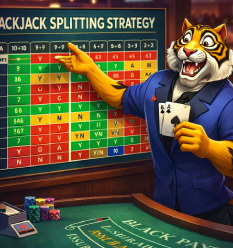
Always split pairs of Aces and 8s regardless of what the dealer shows. Two Aces give you two chances at blackjack (21) instead of one awkward hand totaling 12. A pair of 8s equals 16, the worst total in the game, but splitting transforms this disaster into two fresh hands starting from 8. Never split 10s or 5s: tens already total 20 (a near-certain winner), while 5s create a strong 10 that you should double instead.
Doubling down on 10 and 11 represents your most profitable opportunity in blackjack. When you hold these totals and the dealer shows weakness (2-9), you double your wager because probability favors drawing a ten-value card. The basic strategy blackjack chart indicates exactly when doubling offers positive expected value. Missing these opportunities costs you money over time, as does doubling in situations where the math doesn't support it.
Stiff hands frustrate every player because they're too low to stand confidently but risky to hit. The decision matrix reveals that you should stand on these totals only when the dealer shows 2-6, since the dealer must hit and might bust. Against 7 or higher, the dealer likely has a strong hand, so hitting gives you a fighting chance despite the bust risk. These uncomfortable situations test your discipline, but following the chart minimizes long-term losses.
|
Scenario ⚠️ |
Intuitive move (wrong) ❌ |
Chart move (right) ✅ |
Math benefit 📊 |
|
16 vs dealer 10 |
Stand (fear busting) |
Hit |
Reduces loss by 4% |
|
12 vs dealer 3 |
Hit (seems low) |
Stand |
Reduces loss by 1.5% |
|
Soft 18 vs dealer 9 |
Stand (18 feels safe) |
Hit |
Gains 2% expected value |
|
11 vs dealer Ace |
Hit (scared of Ace) |
Double (many rules) |
Gains ~3% value |
|
A-A vs dealer 5 |
Hit (keep 12) |
Split |
Gains significant edge |
Not all blackjack games follow identical rules, and your strategy must adapt accordingly. Game variation affects which plays remain optimal, particularly regarding doubling, splitting, and surrendering. Lucky Tiger offers several formats, so understanding these differences keeps your play sharp.
Single-deck games offer slightly better blackjack odds for players, with a lower house edge when played perfectly. However, the basic strategy changes subtly between single and multiple decks. For instance, you'd double on 11 against a dealer Ace in single-deck games but might only hit in 6-deck versions. Most online tables use 6 or 8 decks, so focus your memorization there unless you specifically seek single-deck variants.
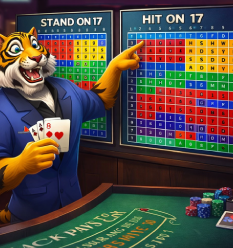
This blackjack strategy card rule significantly impacts your strategy. When dealers hit soft 17 (H17), the house edge increases by about 0.2%, and certain plays change. You'd double on 11 against an Ace under H17 rules, whereas you'd only hit under S17 (dealer stands on soft 17). The surrender option also becomes more valuable in H17 games. Always check the table rules before sitting down so you know which chart section applies.
Surrender lets you forfeit half your bet rather than play out a likely losing hand. Early surrender (before the dealer checks for blackjack) offers better value than late surrender, though it's rarely found. When available, surrender 16 against a dealer 9, 10, or Ace, and surrender 15 against a 10. This move preserves capital for better opportunities rather than throwing good money after bad.
Online blackjack provides the perfect environment for chart-guided play. Unlike physical casinos where pace and social pressure complicate things, digital tables let you reference materials freely and take your time with decisions.
Nobody watches over your shoulder when you play at home. You can keep a basic strategy chart open in another browser tab, printed beside your computer, or displayed on your phone. This accessibility removes the embarrassment some players feel about consulting references in public casinos. Additionally, online hands play at your pace, giving ample time to verify each decision.
Lucky Tiger provides hand history features that let you review past decisions. Use these records to identify patterns in your play and spot where you deviated from probability-based strategy. Tracking win rates across sessions reveals whether discipline correlates with better results. Many players keep spreadsheets logging their decisions, outcomes, and overall performance metrics.
Losing streaks happen even with perfect strategy because variance affects short-term results. The gambler's fallacy convinces people that losses must eventually "balance out" with wins, leading to dangerous bet increases. Your blackjack strategy card remains correct regardless of recent outcomes. Trust the mathematics through cold streaks, maintain consistent bet sizing, and remember that each hand exists independently of previous results.
Both approaches work, though combining them yields the best results. Memorizing core moves speeds up your play, while keeping a reference nearby handles unusual situations. The goal is confident, accurate decision-making without second-guessing yourself.
Start with the most common hands: hard 12-16 versus various dealer upcards, since these appear frequently. Use flashcard apps or quiz yourself by dealing practice hands. Group related rules together, like "always split Aces and 8s, never split 10s and 5s." Repetition builds muscle memory until correct plays feel automatic. Focus on high-frequency decisions first, then gradually add edge cases.
Live dealer games at Lucky Tiger combine human dealers with online convenience. Keep your reference card beside you during these sessions, since nobody can see what you're looking at through your webcam. However, don't slow the game excessively by consulting the chart for every single hand. Aim to glance quickly at tough decisions while handling routine hands from memory.
|
Strategy level 📈 |
House edge |
Expected payout (RTP) |
Long-term result 💰 |
|
No strategy (gut feeling) |
2.5% - 4% |
96% - 97.5% |
Significant losses |
|
Basic knowledge |
1% - 1.5% |
98.5% - 99% |
Moderate losses |
|
Perfect basic strategy |
0.4% - 0.5% |
99.5% - 99.6% |
Near break-even |
|
Strategy + card counting |
Potential positive edge |
100%+ possible |
Possible profit |
Understanding the relationship between table strategy and betting systems prevents costly misconceptions. Your chart blackjack play addresses which cards to play, while bankroll management determines how much to wager. Both matter, but strategy comes first.
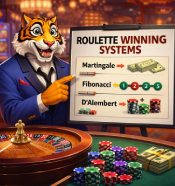
The Martingale system (doubling bets after losses) does nothing to improve your blackjack odds on individual hands. Even if you double your wager, playing a hand incorrectly still costs expected value. Betting systems address variance, not the underlying house edge. Combining Martingale with poor strategy simply accelerates losses during bad runs. Master the decision matrix first; betting systems remain secondary.
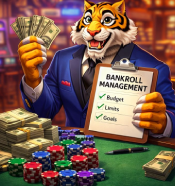
Effective bankroll management means betting appropriately relative to your total funds. Most experts recommend wagering 1-2% of your bankroll per hand, ensuring you survive natural variance. A player with $500 should bet $5-10 per hand, not $50. Combine disciplined bet sizing with perfect basic strategy, and you create sustainable play that maximizes entertainment while minimizing financial risk.
💡 Set session limits before playing. Decide your maximum loss and stick to it regardless of circumstances.
Theory means nothing without application. Practicing both free and real-money modes builds the confidence and speed necessary for smooth, accurate play. Lucky Tiger provides excellent options for players at every skill level.
Free play removes financial pressure while you internalize optimal moves. Deal hundreds of hands, consulting your chart for every decision until patterns become automatic. Track how often you reference the chart, aiming to reduce dependence over time. Demo mode also lets you experiment with aggressive plays like doubling and splitting without risking real dollars. Treat these sessions as serious training, not casual entertainment.
Once you consistently make correct decisions without blackjack chart consultation, transition to low-stakes real money tables. Start with minimum bets to experience the psychological shift that comes with actual risk. Many players discover that emotional responses change when money matters, leading to impulsive deviations from strategy. Recognize these tendencies early, then consciously override them with disciplined play. Gradually increase stakes as comfort and consistency grow.
✅ Pros of chart-based play:
❌ Cons of chart-based play:































.png)









 slots.png)







.png)








.png)








.png)


















.png)