






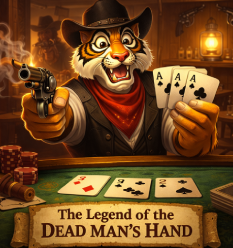
Certain poker hands transcend the game itself, becoming symbols etched into cultural memory. The Dead Man’s Hand stands as the most iconic example, forever tied to a violent afternoon in frontier America. On August 2, 1876, legendary gunfighter Wild Bill Hickok sat down for his final card game, unaware that the cards in his grasp would become immortal. The black aces and eights he held transformed from ordinary playing cards into an enduring symbol of fate and sudden death.
The summer of 1876 brought chaos to the Dakota Territory as gold fever attracted thousands of prospectors and gamblers. Saloons ran continuously, card games determined fortunes hourly, and violence lurked around every corner. Against this volatile backdrop, one of poker folklore's most infamous moments took shape.
James Butler Hickok built his legendary reputation through sharpshooting prowess and fearless confrontations across Kansas and Missouri. By 1876, this 39-year-old icon of Old West history was struggling with failing eyesight and dwindling finances. Despite physical decline, Hickok remained a formidable presence at poker tables, combining mathematical skill with an intimidating demeanor.
The mining camp of Deadwood, South Dakota emerged practically overnight following Black Hills gold discoveries. Within months, nearly 5,000 souls populated this lawless settlement featuring over 70 saloons. Hickok arrived in July 1876, frequenting Nuttal & Mann's Saloon No. 10 where high-stakes five-card draw games attracted serious players.
On that fateful afternoon, Hickok joined a game at Saloon No. 10 with his back to the entrance — a position he normally avoided. A drifter named Jack McCall, nursing resentment from previous losses, entered around 4:15 PM. Without warning, McCall fired a single .45 caliber shot into Hickok's head, killing him instantly and scattering his cards across the table.
The combination Hickok reportedly held has achieved recognition far beyond poker circles. Its fame derives entirely from tragic circumstances rather than any exceptional strength at the card table. Understanding what is the Dead Man’s Hand requires examining both the specific cards and the mythology surrounding them.
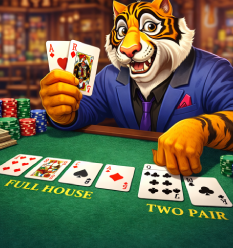
The Dead Mans Hand consists of the ace of spades, ace of clubs, eight of spades, and eight of clubs. This arrangement of aces and eights creates a moderately strong two pair that performs adequately but certainly isn't unbeatable. The black suits — spades and clubs — add a funereal quality that has significantly contributed to the legend's lasting power.
Historical accuracy becomes murky regarding Hickok's fifth card since no definitive record exists. Various accounts suggest the queen of hearts, jack of diamonds, or nine of diamonds as candidates. This uncertainty has fueled endless speculation, allowing different storytellers to customize the legend according to their preferences.
💡 Key theories about the fifth card:
The black suits play a crucial role in Dead Man’s Hand poker mythology and cultural recognition. Spades have long symbolized death in Western card traditions, while clubs represent conflict. Had Hickok held red aces and eights, the hand would lack the ominous visual quality that made it memorable for generations.
Beyond gameplay, aces and eights have accumulated profound meaning in American culture representing frontier unpredictability. Aces symbolize power and authority, while eights suggest balance — when combined under tragic circumstances, they acquired entirely new significance. The technical composition reveals a hand that performs modestly in modern Texas Hold'em despite its legendary status.
|
Card |
Rank |
Suit |
Significance in legend |
|
🂡 Ace |
Highest |
♠️ Spades |
Power confronting death |
|
🃑 Ace |
Highest |
♣️ Clubs |
Authority meeting fate |
|
🂨 Eight |
Mid-range |
♠️ Spades |
Balance destroyed |
|
🃘 Eight |
Mid-range |
♣️ Clubs |
Stability shattered |
|
❓ Unknown |
Varies |
🎴 Disputed |
Eternal mystery |
Few poker combinations have achieved such widespread cultural penetration across entertainment media. From classic Western films to contemporary video games, these cards consistently appear as symbols of danger and fate. Each generation discovers the legend through new artistic interpretations.
Hollywood recognized the dramatic potential early, with Gary Cooper's "The Plainsman" (1936) depicting Hickok's romanticized story. HBO's "Deadwood" series (2004-2006) offered grittier historical portrayal that introduced the tale to modern audiences. Musicians from Bob Dylan to Motörhead have referenced the hand, while countless Western novels feature the imagery prominently.
Contemporary video games like "Red Dead Redemption" incorporate poker mini-games referencing the legendary combination. Comic book publishers have utilized the hand as plot devices in supernatural and Western storylines. These appearances maintain card player mythology relevance for younger generations unfamiliar with original historical accounts.
Many serious poker players genuinely believe the combination brings misfortune to whoever holds it. This superstition persists despite lacking any statistical foundation. The psychology combines powerful death associations, media reinforcement, and natural pattern recognition tendencies.
Setting superstition aside, practical analysis reveals how this legendary combination actually performs at contemporary tables. Mathematical reality differs considerably from historical drama when evaluating gameplay decisions.
In Texas Hold'em, two pair wins approximately 23% of showdowns, with aces and eights ranking among stronger such combinations. The Dead Man’s Hand defeats single pairs and weaker two pairs but remains vulnerable to straights, flushes, and full houses. From purely mathematical perspective, nothing cursed affects its performance.
Modern poker strategy combines mathematical understanding with psychological awareness rather than superstitious thinking. Position, opponent tendencies, and pot odds should guide decisions when holding this combination.
✅ Recommended approach:
❌ Common mistakes:
Players appreciating both history and entertainment can explore themed gaming experiences at Lucky Tiger. The platform welcomes US players seeking engaging gambling options with Old West flavor. Various poker-related casino games offer opportunities to test skills while connecting with frontier gambling traditions.
The Hickok incident represents just one memorable moment among several legendary poker situations throughout gaming history. Comparing famous Dead Man’s Hand reveals what makes certain combinations culturally significant while others remain forgotten.
|
Hand name |
Cards |
Why it's famous |
Historical figure |
|
🎴 Dead Man’s Hand |
A♠️ A♣️ 8♠️ 8♣️ + ? |
Fatal shooting during play |
🤠 Wild Bill Hickok |
|
🏆 Moneymaker's bluff |
5♠️ 4♠️ |
WSOP 2003 championship |
🎯 Chris Moneymaker |
|
💔 Bad beat hand |
Various |
Record jackpot losses |
👥 Multiple players |
|
🎰 Doyle's hand |
10♠️ 2♠️ |
Back-to-back WSOP wins |
🃏 Doyle Brunson |
|
🌟 Big Slick |
A K suited/offsuit |
High-risk premium holding |
📚 Collective naming |














































.png)










 slots.png)










.png)










.png)









.png)











.png)